

Workplace Safety and Health: OSHA Can Strengthen Enforcement through Improved Program Management
Summary Statement
This 2002 GAO report recommended further steps OSHA could take to target inspections on the nation’s most hazardous worksites.
2002
November 2002
Why GAO Did This
Study
The United States has made great progress in improving working conditions
since the construction of the Empire State Building. (See graphic.) Yet,
since the early 1990s, over 50,000 workers have died from work-related
accidents and millions experience work-related injuries or illnesses each
year. The Occupational Safety and Health Administration (OSHA) is the
primary federal agency responsible for protecting workplace safety and
health. GAO was asked to assess how well OSHA was able to target its enforcement
resources on hazardous worksites, measure its accomplishments, and ensure
inspection staff quality.
What GAO Recommends
GAO recommends ways that OSHA can get the most out of its targeting programs,
enhance its ability to measure its impact, and help ensure long-term success
of its efforts to enhance inspector quality.
While OSHA expressed concerns about some of the material in the report,
it generally agreed to act on our recommendations.
OSHA Can Strengthen Enforcement
Through Improved Program Management
What GAO Found
OSHA has taken important steps toward targeting its enforcement resources
on hazardous worksites, measure its accomplishments, and enhance the professionalism
of its staff. However, these systems could be strengthened by better information
and mechanisms that would make targeting efforts more efficient, measurement
more precise, and training efforts more effective.
OSHA's targeting processes have not fully ensured that it identifies hazardous
worksites for priority inspection because its worksite-targeting programs
lack the necessary data to effectively identify high-hazard worksites
or those with hazards under OSHA's jurisdiction. Also, OSHA's measurement
efforts did not accurately demonstrate its impact on workplace safety
and health because, for example, it used national data on injuries and
illnesses to measure its progress in achieving strategic goals even though
only 31 states are covered by these goals. Finally, OSHA's efforts to
enhance the quality of its inspection workforce have the potential to
improve enforcement, but the anticipated outcomes could be jeopardized
by a lack of necessary mechanisms, such as a training directive that reflects
current plans, or a comprehensive database that tracks training or skills
obtained by inspection staff.
Hine, Lewis W., Photographs of the Empire State Building under Construction,
1931. 91PH056.063: A worker hanging onto two steel beams Source:
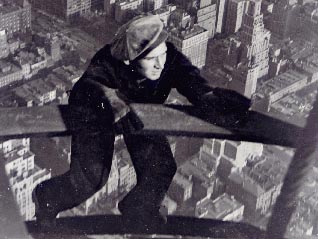
Photography Collection, Miriam and Ira D. Wallach Division of Art, Prints and Photographs, The New York Public Library, Astor, Lenox, and Tilden Foundations.
Contents
| Appendix I | Training Databases Used by OSHA's Regional and Area Offices |
| Appendix II | Comments from the Occupational Safety and Health Administration |
| GAO Comments |
| Appendix III | GAO Contacts and Staff Acknowledgments |
| Figure | |
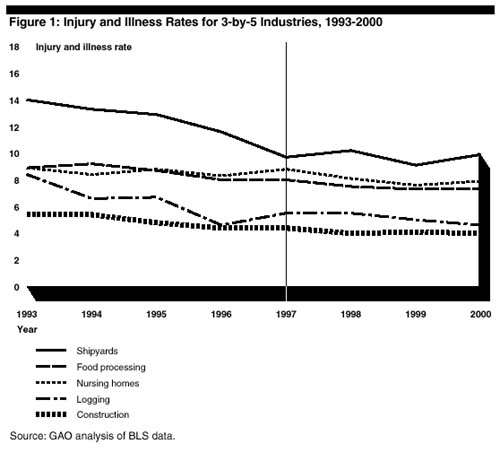
| Figure 1: Injury and Illness Rates for 3-by-5 Industries, 1993-2000 |
| Abbreviations | |
| BLS | Bureau of Labor Statistics |
| GPRA | Government Performance and Results Act of 1993 |
| IDP | individual development plans |
| IMIS | Integrated Management Information System |
| LEP | Local Emphasis Program |
| NEP | National Emphasis Program |
| ODI | OSHA Data Initiative |
| OSHA | Occupational Safety and Health Administration |
| OTI | OSHA Training Institute |
| SST | site-specific targeting |
November 22, 2002
The Honorable Charlie Norwood
Chairman, Subcommittee on Workforce Protections
Committee on Education and the Workforce House of Representatives
Dear Mr. Chairman:
Since the early 1990s, over 50,000 U.S. workers have lost their lives in workplace accidents. Although workplace fatality and injury rates have improved significantly over the last decade, the Department of Labor's Occupational Safety and Health Administration (OSHA) continues to strive to reduce work-related injuries, illnesses, and fatalities for the country's 120 million workers. In carrying out this mission, OSHA faces a number of challenges. As with many other organizations, OSHA seeks to ensure that it (1) focuses its limited resources on those workplaces most likely to cause worker injury, illness, or death; (2) shows that its efforts make worksites safer; and (3) has a highly trained workforce capable of carrying out its mission effectively. OSHA's efforts to address these challenges are made more difficult by the fact that it shares responsibility for workplace safety and health with numerous other entities. For example, while OSHA enforces safety and health regulations in 31 "federal OSHA states," it has delegated its enforcement authority to protect workplace safety and health to 23 "state-plan states," where state agencies have assumed responsibility for establishing their own goals and enforcing safety and health regulations. 1
As agreed with your office, we assessed the extent to which (1) OSHA's worksite-specific targeting processes ensure that OSHA effectively identifies hazardous worksites, (2) the agency's measurement efforts allow it to accurately demonstrate its impact on workplace safety, and (3) its human capital efforts to enhance inspector quality are likely to improve enforcement. Our work focused on the inspection and enforcement activities within the federal OSHA states.
To address the first two objectives, we identified the procedures and data OSHA used to develop its targets and measure its results. We then obtained and analyzed relevant historical data from (1) the Department of Labor's Bureau of Labor Statistics (BLS) on workplace injuries, illnesses, and fatalities; 2 (2) OSHA's integrated management information system (IMIS) inspection database, which compiles activity information on worksite inspections conducted by OSHA; and (3) the OSHA data initiative (ODI) database, through which OSHA targets specific worksites for priority inspection. We also reviewed with experts OSHA's procedures and methods to measure its efforts on workplace safety and health. For the third objective, we reviewed OSHA's recent efforts to restructure its local offices. We also reviewed its plans for providing training to its inspection staff and assessed whether OSHA has in place the policy directives and database systems needed to ensure the success of these efforts. 3 We obtained OSHA personnel's views on these efforts through interviews with officials at 9 of the 10 OSHA regional offices and 17 of OSHA's 85 area offices. 4 For all objectives, we interviewed OSHA and other Department of Labor officials. We conducted our work in accordance with generally accepted government auditing standards between December 2001 and October 2002.
Results in Brief
OSHA's targeting processes have not fully ensured that it effectively identifies hazardous worksites for priority inspection. Specifically, OSHA's efforts to target worksites in the construction industry rely on a database that does not permit OSHA to accurately identify smaller worksites for inspection. Consequently, OSHA's area offices tend to select larger construction worksites to visit, which experts and several OSHA officials believe are generally safer than the smaller worksites. OSHA is currently studying ways to improve construction targeting. In the meantime, some of OSHA's local offices are targeting small construction sites on their own. Also, OSHA's efforts to target high-hazard worksites across other industries rely on employer-provided information that may be unsuitable for accurate targeting. In about 50 percent of the worksites identified, inspectors were unable to conduct inspections or did not find any serious violations. Officials from OSHA's regional and area offices we interviewed expressed concern about the ability of this program to efficiently target hazardous worksites.
Several weaknesses in OSHA's measurement efforts have affected its ability to accurately demonstrate its impact on workplace safety, a difficult, but nonetheless important activity. First, OSHA relied on national injury and illness statistics compiled by BLS to measure progress toward strategic plan goals, despite the fact that OSHA's strategic plan only covers the 31 federal OSHA states. OSHA has not made use of BLS data that would allow it to look at injury and illness rates for these 31 states combined, although BLS says it could make the data available at reasonable cost. Second, the methods OSHA used to measure progress toward its strategic goals potentially misstated its accomplishments. For example, the way it measured declines in injury and illness rates included declines that occurred before its strategic plan was implemented. Finally, when assessing its impact, OSHA did not fully account for many relevant factors outside its control that may have affected changes. For example, in reporting that it exceeded goals for reducing fatalities in the construction industry, OSHA did not acknowledge that some portion of these fatalities might have been due to hazards under the authority of others, such as the Department of Transportation. As a result, reductions in such fatalities would have no direct relationship to OSHA's efforts.
OSHA's efforts to enhance the quality of its inspection workforce can possibly improve enforcement, but anticipated outcomes could be jeopardized by several factors. OSHA has restructured its local offices into multidisciplinary teams (i.e., teams comprised of safety inspectors and health inspectors), with team leaders responsible for overseeing the work of those teams. While this change has fostered greater collaboration between safety and health inspectors, the creation of these teams has, in some locations, led to insufficient internal controls in the supervisory review process. For example, in some cases where team leaders are safety inspectors, they may lack the expertise needed to review case files that support health inspectors' citations. This practice could lead to inconsistency in citations or citations being made without the proper justification. In addition, while OSHA's plans to upgrade the training provided to its inspection force have promise, OSHA faces two primary obstacles to success. First, OSHA's training directive does not reflect the agency's current training plans, so there is no assurance that its current training plans will have organizational support over the long term. Second, OSHA lacked the necessary data to assess whether training contributes to agency performance because it did not use a single, comprehensive database to efficiently track the training and skills obtained by its inspection force.
We are recommending that OSHA strengthen management of its enforcement activities by improving targeting and measurement procedures and by helping ensure the long-term success of the agency's efforts to enhance inspector quality. While OSHA expressed concerns about some of the material in this report, it generally agreed to act on our recommendations.
Background
The Occupational Safety and Health Act states that it is congressional policy to "assure so far as possible every working man and woman in the Nation safe and healthful working conditions . . ." 5 In fiscal year 2002, OSHA pursued this mandate with about $443 million and 2,316 employees, including 1,123 inspectors. 6 Despite this broad mandate, OSHA does not have complete authority over all worksites in this country. For example, through the appropriations process, Congress has placed restrictions on OSHA's enforcement activities regarding small farming operations and small employers in low hazard industries. Also, pursuant to the act, OSHA has delegated federal enforcement responsibility to 23 state and territorial governments that carry out their own programs. 7 OSHA has provided half the funding for these programs to state-plan states, which must have program standards that are "at least as effective" as the federal program. In other cases, federal agencies other than OSHA have jurisdiction over particular workplaces or hazards. 8 For example, the Department of Labor's Mine Safety and Health Administration is responsible for ensuring the safety of mining worksites, while transportation-related hazards are generally within the jurisdiction of the Department of Transportation.
OSHA also relies on BLS to provide it with data on injuries, illnesses, and fatalities. Since 1992, BLS has surveyed a sample of approximately 180,000 employers and asked them to report information on the number of work-related injuries and illnesses occurring at their worksites. This information comes from injury and illness records that private industry employers are required to maintain. From this information, BLS calculates injury and illness rates. BLS identifies fatalities from a census of all 50 states, the District of Columbia, and New York City, which report on all work-related fatalities within their jurisdictions. BLS requires the reporting entities to corroborate reports on fatalities by obtaining multiple sources of information, such as OSHA fatality information, death certificates, medical examiners' reports, media reports, and workers' compensation documents. BLS makes injury, illness, and fatality data available at the national as well as at the state level.
To ensure that it makes the best use of its resources, OSHA, like other federal agencies, established strategic goals that drive agency efforts and has begun to measure the attainment of those goals. 9 In OSHA's 1997-2002 strategic plan, it identified an overarching goal to "[i]mprove workplace safety and health for all workers, as evidenced by fewer hazards, reduced exposures, and fewer injuries, illnesses, and fatalities." OSHA characterized this overarching goal as the cornerstone of its enforcement program. 10 According to OSHA, it planned on "focusing . . . [a]gency resources on the most prevalent types of workplace injuries and illnesses, the most hazardous industries, and the most hazardous workplaces." OSHA identified specific areas that it believed were the most hazardous and by which OSHA would measure its progress. These specific areas, as shown in table 1, focused on three hazards and five industries or industry sectors (which are subsets of larger industries), and are known as OSHA's "3-by-5 goals." OSHA also identified a goal to reduce fatalities in the construction industry by 15 percent and reduce injuries and illnesses by 20 percent in 100,000 workplaces where OSHA initiates an intervention.
Table 1: OSHA's 3-by-5 Strategic Plan Impact Goals (1997 to 2002)
| Goal | Targeted areas |
| Reduce three of the most prevalent types of workplace injuries and causes of illnesses by 15 percent in selected industries and occupations. | Hazards
|
| Reduce injuries and illnesses by 15 percent in five industries characterized by high- hazard workplaces. | Industries
or industry sectors |
Because GPRA applies only to federal agencies, the 23 state-plan states are not required to adopt these goals. OSHA asked these states to establish industry and hazard goals similar to OSHA's 3-by-5 goals relevant to the worksites in their respective states. In some cases, the state-plan states selected hazards or industries that mirrored the federal ones; in other cases, they did not.
Recognizing that its 3-by-5 goals would probably not include every hazard and industry that would prove dangerous to workers over the 5-year duration of the strategic plan, OSHA established various other mechanisms through which it could identify areas that pose hazards to workers. Through national emphasis programs (NEP), OSHA headquarters has identified industries or hazards deserving priority attention from its area offices. In the last several years, OSHA has averaged about 10 NEPs annually. Some NEPs have reflected areas selected in the strategic plan, while others have focused on other areas (e.g., the petrochemical industry) not in the strategic plan. While OSHA provides direction to its area offices for implementing NEPs, the area offices have considerable flexibility in selecting actual worksites. In addition, area offices can also use local emphasis programs (LEP) to highlight industries or hazards within their jurisdictions that they believe are hazardous. (See table 2.)
OSHA also has two national targeting programs that are aimed at identifying worksites for priority inspection. First, as shown in table 2, OSHA has a targeting program that relies on data from the F.W. Dodge Report for identifying worksites in the construction industry. Second, OSHA has a site-specific targeting program (SST), which identifies a list of high-hazard worksites in other industries through its OSHA data initiative. OSHA's targeting efforts must be carried out on a neutral and objective basis, in accordance with legal requirements.
Table 2: OSHA's Procedures for Identifying Industries, Hazards, or Worksites to Target
| Targeting effort | Process followed |
| NEP | Based on national information, OSHA headquarters identifies key industries, industry sectors, or hazards that regional and area offices may target. (Over the last few years, OSHA's NEPs have covered petrochemical, poultry processing, and nursing homes.) Regional or area offices develop a particular strategy for targeting workplaces in these areas. |
| LEP | Based on information for its locality, an area or regional office may decide that an industry, industry sector, or hazard is particularly dangerous and seek approval to identify it as an LEP. (In fiscal year 2001, there were over 100 LEPs, ranging from residential construction to sawmills.) Area and regional offices develop a particular strategy for targeting workplaces in these areas. |
| Construction Industry | OSHA local offices ask the University of Tennessee's Construction Industry Policy and Research Center to provide them with monthly lists of randomly selected nonresidential construction projects scheduled to start in the next 60 days on the basis of particular criteria (usually related to project value) developed by the local office. a To develop these lists, the center applies a statistical model to data contained in the F.W. Dodge Report, which is initially generated by the McGraw-Hill Companies. The information provided to local offices includes the predicted start and completion dates of the projects. Since construction sites are temporary, local offices need this information to plan inspections. Local offices then visit construction sites on the list. |
| ODI/SST | As part of the ODI begun in 1998, OSHA identifies various industries that have an injury and illness rate above a predetermined level, as well as other industries that it believes are hazardous. b OSHA asks Dun and Bradstreet Corporation to provide it with specific information (such as employer names and addresses) for approximately 140,000 worksites with 40 or more employees from these industries. OSHA selects about 80,000 worksites that it believes have a strong potential for being hazardous based on the relative hazardousness of their industries. OSHA contacts each of these worksites and asks them to provide their most recent annual injury and illness data. Of these 80,000 worksites, OSHA then selects about 14,000 that it considers to be the most hazardous and sends them a letter informing them that they might receive a compliance inspection. OSHA provides 3,000 of these worksite names to area offices for priority inspection. c These worksites constitute the actual SST list. |
As another way to help ensure that its resources are well used, OSHA has restructured local office operations. Before fiscal year 1997, area offices were organized in single-discipline teams that responded to worker complaints and conducted planned inspections. Starting in fiscal year 1997, OSHA reorganized its local offices into multidisciplinary teams comprised of both safety inspectors 11 and health inspectors. These teams specialized in either responsive activities (i.e., responding to worker complaints, accidents, or serious injuries; or acting on referrals from other agencies) or planned activities, such as conducting planned inspections and providing employers with compliance assistance (i.e., various efforts to help employers who voluntarily seek to comply with OSHA regulations). To assist these teams, OSHA placed a compliance assistance specialist at each area office who provides services such as helping employers correct hazards identified during inspections. OSHA also instituted new procedures that permitted area offices to expedite the process for responding to informal worker complaints by allowing inspectors to resolve complaints by phone or fax without visiting the worksite.
OSHA has also improved training opportunities for its inspection workforce. The agency has expanded course offerings available to inspectors at the OSHA Training Institute (OTI) and through satellite delivered and web-based training. In addition, OTI is revising its curriculum to prepare new inspectors both for their new jobs and for professional certification in either safety, health, or as an engineer. The agency has also developed a plan to assist experienced inspectors to obtain professional certification, should they choose to do so, and to retain professional certifications already achieved. The curriculum for professional certification will vary considerably depending on the type of certification sought by the inspector and the inspector's current experience and level of training. OSHA's certification assistance also includes paying for preparation materials and certification examination fees and making time available at work for staff to study. Concurrently, OSHA managers are using an individual development plan (IDP) process to help inspectors identify training needs and select appropriate training opportunities.
OSHA's Targeting Procedures May Not Effectively Identify Hazardous Worksites for Inspection
The targeting processes that OSHA used have not fully ensured that the agency effectively identifies hazardous worksites for priority inspection. Specifically, when targeting the construction industry, OSHA relied on a database that did not adequately identify the smaller, potentially more hazardous worksites. In the meantime, however, OSHA area offices have taken actions on their own to target small construction sites. Also, the efficiency of OSHA's efforts to target high-hazard worksites across other industries through its SST program may be limited by faulty information that caused OSHA to send inspectors to worksites that were either not hazardous or that had hazards that were outside of OSHA's control.
Current Construction Industry Targeting Biased toward Larger Worksites
OSHA's current construction industry targeting procedure has not provided local offices with adequate information on smaller construction worksites. OSHA relies on information from the F.W. Dodge Report database, provided by the University of Tennessee, to identify construction worksites for potential inspection. This database provides selected information on each construction site, including the projected start and completion dates. However, the start and completion dates, which are added to the database at the University of Tennessee, are often erroneous for small construction sites.
Since they had more confidence in the information the database provided on larger worksites, OSHA's area offices generally selected larger construction worksites to inspect. About half of the area office directors we interviewed said they do not request information on smaller construction sites through the F.W. Dodge Report process. Several local office directors told us that, when relying on the database to identify small construction worksites, they would only send inspectors to areas where there were multiple worksites in close proximity in the hope of finding at least one that would be available for inspection. Knowledgeable experts and officials within and outside OSHA, including area office officials, saw this as problematic because larger construction worksites are generally safer than smaller ones, although they acknowledge that conclusive data to demonstrate this are unavailable.
OSHA officials acknowledge that the F.W. Dodge process can be improved to better identify high-hazard construction worksites and are undertaking efforts to identify ways to improve the construction targeting process. OSHA has asked the University of Tennessee to study all factors, including size, that may lead to injuries and illnesses in construction in order to determine the relative level of hazard represented by individual construction worksites. As of July 2002, the University of Tennessee had yet to initiate work on this study. This effort should help OSHA use more sophisticated criteria to select the most hazardous construction worksites for priority inspection, but it does not aim to address the immediate bias toward targeting larger construction worksites. To address current problems, we found that several of the local offices were using various methods to supplement the F.W. Dodge Report data to better target smaller construction worksites. Eight of the 17 area office directors we interviewed stated that they relied on more informal criteria and LEP initiatives to target smaller construction workplaces. For example, in 1999-2000, four area offices developed LEPs for residential construction worksites because office personnel were seeing increasing numbers of fatalities or injuries occurring at these sites. These local offices believed their efforts were successful in locating the smaller, more hazardous worksites. However, not all area offices had established local emphasis programs for smaller construction worksites.
SST Program Does Not Effectively Identify Hazardous Worksites
The SST program is limited in its ability to effectively identify hazardous worksites. 12 Our review of OSHA's own IMIS inspection database found that for about half the worksites identified through this process, inspectors were unable to do an inspection or, if they did, cited no serious violations. While OSHA headquarters officials have not analyzed why this occurs, our review of IMIS as well as interviews with area office directors indicate that these outcomes could result from faulty information that caused OSHA to send inspectors to worksites that were either not hazardous or that had hazards that were outside of OSHA's control.
In some cases, OSHA received outdated or incorrect information about the establishment itself (i.e., name, location, nature of business, or number of employees). As a result, inspectors may have been unable to conduct an inspection. In other cases, OSHA received miscalculated information about the employer's injury and illness rate. In these situations, inspectors visiting worksites determined from an inspection of its records that the actual injury and illness rate was not high enough for the employer to qualify for an inspection. 13 We found, based on inspection data from OSHA's IMIS database, that inspectors performed no inspection or just a records inspection (i.e., a review of the employer's injury and illness records) for about 17 percent of the worksites identified on the original SST list.
In other cases where the information on the worksite injury or illness rates was correct, the data collected may still have been otherwise unsuitable for efficiently targeting those high-hazard worksites where OSHA can have an effect. In collecting information for this program, OSHA asked employers for only 1 year of injury and illness data. Area office officials we interviewed said that in some cases, this 1-year rate was an outlier that did not reflect general worksite operations. Moreover, the data OSHA collected were generally 2 years old before inspectors conducted the inspection. As a result, employers might have taken actions, such as using OSHA's consultation program, 14 to improve working conditions by the time the inspector arrived. Also, the injuries and illnesses may have been caused by workplace hazards OSHA does not address. 15 Again, using IMIS, we found that for about 17 percent of worksites on the SST list, inspectors found no violations. In another 14 percent, inspectors found no serious violations.
Generally, officials from OSHA's regional and area offices we interviewed expressed concern about the ability of the SST program to reach those worksites with hazards that inspectors can address. Over half stated that the program did not identify a sufficient number of employers with serious violations to warrant their participation. For example, at one local office, we were told that 35 percent of worksites on the list were not cited for a violation. They noted that OSHA spends significant time and energy to develop the SST list. They also noted that significantly fewer resources are spent identifying worksites under national or local emphasis programs, yet they appear to be more successful in identifying serious violations. Our review of IMIS data on the results of LEP inspections found that over 60 percent of inspections had serious violations. 16 Also, our review of reports from area offices on the results of their LEP efforts identified anecdotal information about the success of LEP investigations for reaching the most hazardous worksites.
In contrast to the views expressed by regional and area officials, OSHA headquarters officials noted that a 50 percent serious violation rate could be acceptable if it meant that employers had actually improved working conditions between the time they were notified of a possible inspection and the time the inspection actually took place. 17 However, there is insufficient information to determine whether this violation rate should be interpreted as a positive sign that employers are taking action, or rather an indication that OSHA has not reached the most hazardous worksites.
Additionally, there is insufficient information available to know what impact the SST program has on reducing injuries and illnesses. First, OSHA has little data on injury and illness rates for the period after the SST inspections occurred. Having this information could help OSHA identify changes that happened after an inspection took place. Such an analysis would be imperfect since other intervening factors may have influenced injury and illness rates, but the results might still be useful. Moreover, OSHA did not establish a comparison group of employers whose worksites were equally hazardous, but were not selected for inspections. Developing such a comparison group has potential to help OSHA address the problem presented by intervening factors. There are several possibilities for a comparison group, including employers from the original ODI list that were not selected to be on the SST list, or similar types of employers located in state-plan states. We acknowledge that there are many factors to be considered in developing a comparison group. One expert we interviewed suggested that it might be difficult to use the ODI database for both targeting and evaluation and suggested that OSHA develop a similar database of establishments to be used purely for evaluating SST's effectiveness.
OSHA's Measurement Efforts Have Not Accurately Demonstrated Its Impact
Several weaknesses in OSHA's measurement efforts affected its ability to accurately demonstrate its impact on workplace safety. To measure progress toward its strategic plan goals, OSHA relied on national injury and illness statistics rather than on data specific to those states covered by OSHA's strategic plan. Moreover, the methods OSHA used to measure its progress may have misstated its accomplishments. Finally, when assessing its impact, OSHA did not account for many relevant factors outside its control that may have affected changes in the number of work-related injuries, illnesses, and fatalities.
National Data Do Not Provide a Reliable Picture of OSHA's Impact
By using national data, OSHA lost the opportunity to understand what is happening with regard to injuries and illnesses in the states covered by its strategic plan. According to OSHA officials, available data did not allow them to measure changes in injury and illness rates for all federal OSHA states combined. In about 10 federal OSHA states, the amount of data BLS collects about injuries and illnesses is insufficient to allow the information to be generalized to the entire state. However, BLS uses the information from these 10 states in calculating its national estimate of workplace injuries and illnesses. OSHA officials told us that the lack of data from these states precluded BLS from making injury and illness estimates for all federal OSHA states combined. Nonetheless, according to BLS officials, available data from these 10 states could be combined with data from the other federal OSHA states to provide an overall estimate of injury and illness rates for the combined federal OSHA states. They said that this could be done at little or no additional cost to OSHA, but it may take up to a year to fully generate and test the program needed to produce this estimate, although some information could be made available sooner.
OSHA's Methods for Measuring Performance May Have Misstated Its Accomplishments
OSHA used methods to measure its progress in reducing injury and illness rates in the industries and hazards highlighted in its strategic plan that may have misstated its accomplishments. More specifically, to measure its progress in achieving its strategic plan goals, OSHA compares the most recent injury and illness data to a 1993 through 1995 baseline. For example, in its 2001 annual report, OSHA compared calendar year 2000 injury and illness data (the latest information available from BLS) with the same data for 1993 through 1995. Based on this comparison, OSHA reported that injury and illness rates declined by 26 percent in shipyards; 18 percent in food processing; 9 percent in nursing homes; 36 percent in logging; and 23 percent in the construction industry. Yet, as shown in figure 1, based on data reported by BLS, a portion of these declines occurred before 1997, the first year of the strategic plan's implementation. While the agency may well have contributed to improvements before 1997, those downward trends in illness and injury cannot be characterized as an indication of the plan's effectiveness. Further, even using the 1993-95 point of comparison, two of the five industries highlighted in OSHA's strategic plan did not have changes that were statistically significant, according to an OSHA official. 18 Comparing changes between 1996 (the year before the strategic plan went into effect) and 2000, we estimated that three of the five industries highlighted in OSHA's strategic plan did not have changes that were statistically significant. 19
Additionally, OSHA itself has acknowledged that it misstated its progress in achieving its goals for two of the three hazards highlighted in its strategic plan, those pertaining to reducing exposure to silica and lead. Initially, OSHA took reductions in silica and lead exposure at worksites it inspected and generalized them to the nation as a whole. In its fiscal year 2001 annual report, however, OSHA acknowledged that this was inappropriate and that the data and process did not satisfactorily measure progress on this goal. OSHA added that its methodology did not measure the average exposure severity for lead and silica in all workplaces; instead it measured the average exposure severity at workplaces that OSHA inspected, which have been specially targeted as potentially hazardous.
OSHA Did Not Consider Many Relevant Factors When Assessing Its Impact
When assessing its impact, OSHA did not consider many of the factors outside its control that may have influenced changes in the level or type of injuries, illnesses, or fatalities. There is general agreement among those we interviewed within and outside of OSHA that other factors, such as workers' compensation programs, have an effect on workplace safety and health. However, in presenting its evaluation of progress toward strategic goals, OSHA did not account for the potential effects of these other influences in its annual reports. Also, in some cases, OSHA did not account for hazards causing injuries, illnesses, or fatalities not under its full control. For example, while OSHA reported that it exceeded its goals for reducing fatalities in the construction industry, it did not report that some portion of this reduction might have occurred because of declines in transportation-related accidents under the authority of the Department of Transportation. For example, in 2001, about half of the fatalities in the construction industry that resulted from transportation accidents were likely under the authority of the Department of Transportation.
OSHA's Efforts to Enhance Inspector Quality Have Potential to Improve Enforcement, but Anticipated Outcomes Could Be Jeopardized
OSHA's initial efforts to enhance inspector quality are encouraging, but the anticipated outcomes could be jeopardized. First, although OSHA's restructuring efforts, which included the use of multidisciplinary inspection teams, have had some positive results, the effort may have also led to insufficient internal controls in the supervisory review process that could adversely affect the consistency of enforcement. Additionally, OSHA's efforts to increase training opportunities for inspection staff hold promise but face two obstacles that, if not addressed, may undermine the long-term success of the resources invested in training.
Restructuring Is Positive, but May Have Led to Lack of Controls in the Supervisory Review Process
OSHA's local office restructuring appears to have strengthened inspectors' ability to enforce workplace safety and health standards. First, OSHA's effort to develop multidisciplinary teams has resulted in increased opportunities for cross-training among safety and health inspectors. Indeed, two of the local office directors we interviewed said that inspectors are better able to detect violations, even if the violations are outside of their disciplines. Second, having a compliance assistance specialist at each area office has provided inspectors with a much needed in-house resource for identifying techniques to make workplaces safer. Eleven of the 17 area office directors we interviewed said the compliance assistance specialist position has greatly enhanced inspector quality, helping inspectors provide cutting-edge information to employers about how to abate identified hazards. Third, OSHA's new flexible process for responding to complaints by phone or fax rather than actual visits has made inspectors more efficient and able to focus on priority areas. Some of the 17 area office directors we spoke with stated that this more flexible complaint process freed up inspectors' time by as much as 30 percent or more, allowing them to focus on planned inspections and compliance assistance rather than respond to complaints.
However, the move to multidisciplinary teams may have undermined the internal control process for supervisory review of inspectors' case files. Some area office directors we interviewed said that some team leaders (who generally have backgrounds in safety) do not have the expertise needed to review the health inspectors' case files that accompany and support proposed violations. About half of the 26 regional administrators and area directors we interviewed expressed concern about this issue. These officials explained that when team leaders are unable to review case files, they generally ask someone else in the local office with the appropriate expertise to review them, thus resulting in additional review time and a greater potential for mistakes because of the additional individuals involved in the process.
Area office officials we interviewed have attempted to address this problem with varying degrees of success. Some have sought to resolve this issue working within the multidisciplinary team structure. For example, those offices that were large enough to establish multiple teams for carrying out planned activities selected team leaders from both the safety and health disciplines. They can support each other and provide technical guidance to inspectors regarding both safety and health issues. Other area offices did not follow headquarters directives and chose not to restructure into multidisciplinary teams. Instead, they maintained separate teams of safety inspectors and health inspectors. These area office directors told us that they essentially attain the goals of a multidisciplinary team approach by creating temporary multidisciplinary teams whenever the need arises. They stated that, in this way, their offices obtain the benefits of multidisciplinary teams while minimizing the problems other offices have had with team leaders lacking necessary expertise. Two area office directors we spoke with expressed a desire to go back to separate teams of safety inspectors and health inspectors but believed they needed permission from OSHA headquarters to do so. OSHA has yet to address these concerns at the national level.
Training Plans Hold Promise, but Lack of an Appropriate Training Directive and Data System Pose Obstacles
OSHA's plans to upgrade inspector training have the potential to improve the professionalism and capabilities of the inspection staff. OSHA officials we interviewed stated that they are upgrading the curriculum of the OSHA Training Institute (OTI), which will provide inspectors with training opportunities that give them a broader understanding of the issues surrounding worker safety and health and will improve their skills to conduct inspections. Furthermore, the officials added that OSHA's individual development plan process should help ensure that all inspectors and their managers identify the kind of training they need to maintain skills and expand expertise. A majority of area office officials we interviewed were encouraged by OSHA's plan to offer inspectors opportunities to become professionally certified. Eight of the 17 area directors we interviewed stated that inspectors with professional certifications would appear more credible to employers and be better able to assist these employers to correct hazards. Over three-quarters of area office directors we spoke with said they saw value in promoting professional certifications among the inspector staff. Professional association officials we spoke with supported continuing education and/or certification training for OSHA inspectors, which they believed would enhance inspector quality.
However, OSHA's training plans face obstacles that may jeopardize long-term success. First, OSHA's official training directive fails to reflect OSHA's new commitment to training. It states, "at a minimum, each [OSHA inspector] is required to attend a safety and health related course once every 3 years." This directive is inconsistent with current training practices and the planned training for professional certification. Two of the area office directors we spoke with said that they could not rely on the directive as leverage to encourage those inspectors that may be unwilling to take needed training to improve their skills. Moreover, without having a formal directive that reflects what OSHA is trying to accomplish, area office directors expressed concern that current management focus and initiatives with regard to training could be lost in the event of a budget cut. This is especially important given that OSHA does not plan on finalizing its assessment of the level and type of resources that will be necessary to carry out this training until February 2003.
The second obstacle that may affect OSHA's long-term success is the lack of a comprehensive database that tracks training or skills obtained by inspectors. With regard to training, OSHA's local offices currently access or maintain 18 incompatible national, regional, and local (including formal and informal) databases for inspector training information. For example, 7 of the 9 regional offices we contacted each maintain their own training database and 2 regional offices use a human capital database operated by the Department of Labor. 20 Of the 17 area offices we interviewed, 8 of them use the relevant regional database, while 4 area offices developed their own database system and 5 used paper files. (See table 3 in app. I.) In addition, the OTI operates a separate database that tracks only the training that it provides. None of these databases track OSHA inspectors' work-related skills. Area office directors we interviewed stated that OSHA often hires inspectors due to expertise in a particular area (e.g. crane safety) that they obtained prior to joining OSHA. This expertise is not reflected in any of these databases. As a result, OSHA managers would be unable to easily identify an inspector hired from the construction industry who has experience with crane safety developed from another job.
Because OSHA managers do not have reliable information on training and skills, they cannot readily identify inspectors with expertise in key hazards. In addition, OSHA managers seeking to determine whether the agency can meet certain future contingencies have no formal mechanism for identifying the skills of inspectors but must rely instead on personal knowledge or informal paper records held by individuals within the organization. Furthermore, we have reported that, without reliable data to assess the level and type of training and skills available, an agency cannot assess the extent to which training contributed to agency performance. 21
Conclusions
OSHA has taken important steps toward targeting its enforcement resources on high-hazard worksites, measuring its impact, and enhancing the professionalism and quality of its personnel. However, OSHA's enforcement efforts could be strengthened by better information and procedures that would make targeting efforts more efficient, measurement more precise, and training efforts more effective.
OSHA may not be getting the most out of its targeting programs because of data problems that limit OSHA's ability to inspect high hazard worksites. For example, the current process for targeting construction worksites may not allow OSHA to systematically identify potentially more hazardous construction worksites. OSHA's long-term research may ultimately address this problem. However, in the meantime, there is little assurance that area offices are inspecting smaller worksites. Data problems also limit the effectiveness of OSHA's site-specific targeting program. Without improving the suitability of these data, OSHA will continue to expend significant resources on this program with little certainty that it is identifying the most hazardous worksites and making the best use of its inspection resources. Moreover, OSHA did not set up the site-specific targeting database in a manner that would allow it to evaluate the program's impact on reducing injury and illness rates. As a result, it lacks sufficient information to determine whether program outcomes justify the resources expended.
The data and methodologies OSHA has used to measure its progress toward achieving strategic goals do not offer sufficient assurance that its efforts to measure its accomplishments produce a true picture of the agency's impact on workplace safety and health or that they offer an appropriate assessment of agency progress in meeting its own goals. OSHA, as the federal agency responsible for overall workplace safety and health, understandably has an interest in tracking national trends in workplace injuries, illnesses, and fatalities. However, these data and methodologies may not reflect what is happening in those states or for those hazards that OSHA is responsible for under its strategic plan. As a result, OSHA lacks valuable management oversight information concerning the impact of those inspection activities for which it is most directly accountable.
Finally, OSHA has taken significant actions and plans to improve the quality of its inspection staff. However, unless area offices can share best practices regarding supervisory review, OSHA may not be able to ensure that the move to multidisciplinary teams does not adversely affect internal controls. Moreover, unless its training directive is updated to reflect OSHA's current training strategy, the agency cannot ensure that its current strategy becomes institutionalized and implemented. And, OSHA currently lacks reliable information on the training and skills of its inspection workforce. This information is fundamental to improving the quality of OSHA's workforce.
Recommendations for Executive Action
To better ensure that OSHA gets the greatest benefit out of its targeting programs, we recommend that the Secretary of Labor direct OSHA to
- encourage area
offices to supplement inspections of large construction worksites with
locally planned efforts to inspect smaller worksites,
- strengthen the
validity of the data used to identify worksites in the site-specific
targeting program by addressing the data weaknesses identified in this
report, and
- assess the site-specific targeting program's impact on workplace injuries and illnesses in light of the resources expended.
To help ensure that OSHA's efforts to improve inspector quality achieve their potential outcomes, we recommend that the Secretary of Labor direct OSHA to
- review area office
efforts to develop alternative supervisory review procedures in order
to identify promising practices and disseminate results to other offices,
- update OSHA's
training directive to reflect its current training strategy, and
- work with Labor's Office of the Assistant Secretary for Administration and Management to develop an information system to track and assess training and skills obtained by the inspection staff. This could include developing a new system or adapting existing systems.
We provided a draft of this report to Labor for comment. Overall, OSHA said that our report provides useful recommendations to consider as it moves forward in its efforts to improve the working conditions throughout the nation. The agency also pointed out a 30-year decline in occupational-related fatalities that took place despite huge increases in the U.S. workforce. Further, OSHA highlighted its belief that its enforcement system has achieved striking results, noting recent declines in injury and illness rates.
Although OSHA generally agreed to take action on the report's recommendations, it expressed a number of concerns about material presented in the report. More specifically, OSHA raised questions about certain aspects of our analysis of the construction worksite targeting program. For example, it noted that we had recommended the use of local emphasis programs to help target small construction sites while acknowledging an absence of definitive data showing that smaller worksites are more hazardous than larger sites. We made this recommendation because (1) knowledgeable experts—including some at OSHA—told us that smaller sites were more hazardous and (2) the current construction targeting system does not adequately encompass these sites. We continue to believe that supplementing inspections of larger worksites with inspections of smaller ones is a prudent approach to take until OSHA completes its study of factors to help identify better ways to identify the most hazardous construction worksites.
OSHA also expressed several concerns about our analysis of the SST program. For example, it pointed out that, in apparent contrast to our findings, the agency's quality control reviews indicated a high level of accuracy regarding the employer-submitted injury and illness data the program uses for targeting inspections. In our view, there is not necessarily an inconsistency between the quality review findings and ours. For example, the data may have been accurate at the time an employer submitted it to OSHA but out of date by the time it was used for targeting purposes. Additionally, OSHA noted that interventions, other than from the SST program (e.g., consultation visits), could have caused an employer to correct unsafe conditions and help explain the lack of citations during the SST visits. We agree. However, the fact remains that there are insufficient data to determine the validity of this explanation versus other possible explanations. In the meantime, the SST program—a targeting program intended to identify high-hazard worksites—continues to direct inspection resources to large numbers of sites that have no serious violations.
Finally, OSHA made several comments on our examination of the agency's ability to demonstrate impact on workplace safety and health. For example, it reaffirmed its use of 1993 through 1995 data as a reasonable baseline from which to measure its strategic plan's accomplishments, noting, among other things, that a baseline is by definition arbitrary. We continue to believe that, by selecting the baseline it did, OSHA took credit for declines that occurred before 1997, the year when the strategic plan was implemented.
Labor's comments in their entirety as well as our responses to their comments are shown in appendix II. Additionally, both OSHA and BLS offered technical comments, which we incorporated throughout the report.
We are sending copies of this report to the Secretary of Labor and the Assistant Secretary for Occupational Safety and Health. We will also make copies available to others upon request. In addition, the report will be available at no charge on the GAO Web site at http://www.gao.gov. If you have any questions about this report, please call me on (202) 512-7215. Major contributors are listed in appendix III.
Sincerely yours,
Robert E. Robertson
Director, Education, Workforce and Income Security
1 Both "federal OSHA states" and "state plan states" include jurisdictions, such as the District of Columbia and Puerto Rico. For this review, we included Connecticut, New Jersey, and New York as federal OSHA states. Although these states have been delegated authority for public sector workers, OSHA maintains responsibility for private sector workers in these states.
2 Throughout this report, we use nonfatal injury and illness "rates," which represent the number of work-related nonfatal injuries and illnesses per 100 workers.
3 OSHA has not yet developed an overall human capital strategic plan that these efforts would fit into. OSHA's overall human capital planning efforts were outside the scope of our review.
4 We did not contact OSHA's regional office in San Francisco because it has only state-plan states within its jurisdiction. State-plan states are not governed by OSHA's human capital policies and procedures. We selected the 17 area offices to reflect a mix of characteristics, including size of office, the level of employment within the geographic area covered by the office, the average length of service time for the staff in each office, and whether the office obtained a best practices designation from OSHA.
5 29 U.S.C. 651(b).
6 These include safety inspectors, who seek to prevent workplace-related accidents resulting from unsafe machinery or procedures; and health inspectors, who seek to prevent illnesses resulting from toxic exposures.
7 29 U.S.C. 667. Delegations of authority occur only after a state or territory submits a plan that is determined to be consistent with the requirements of this section.
8 See our January 31, 2000, report, U.S. General Accounting Office, Occupational Safety and Health: Federal Agencies Identified as Promoting Workplace Safety and Health, GAO/HEHS-00-45R (Washington, D.C.: Jan. 31, 2000), which states that OSHA works with 14 other federal agencies that have limited jurisdiction over workplace safety and health.
9 These efforts were primarily driven by the enactment of the Government Performance and Results Act of 1993 (GPRA). OSHA reported its goals for 1997-2002 separately but reported on their attainment as part of the overall efforts of the Department of Labor.
10 OSHA's strategic plan includes a variety of goals, many of which specify the activities that the agency will pursue.
a The University of Tennessee's Construction Industry Policy and Research Center also maintains the Dodge Data Lines, which provide OSHA with information on residential construction projects. Access to the Dodge Data Lines database is included in the price OSHA pays for the F.W. Dodge Report data.
b In past years, OSHA excluded the construction industry from consideration. OSHA now plans to include construction in this process.
c OSHA sends this list only to its area offices in federal OSHA states. These area offices are expected to visit all SST worksites identified; however, any office that does not have the resources to inspect all worksites on the original list may use a random process to select a subset of these worksites for inspection. OSHA sends information on additional worksites in state-plan states to the appropriate state agencies. All state-plan states participate in this process except Oregon, South Carolina, Washington, and Wyoming.
Source: OSHA.
11 For purposes of this report, the term "safety inspector" refers to both OSHA safety inspectors and safety engineers. Safety engineers have more education than safety inspectors.
12 As shown previously in table 2, through OSHA's ODI process, OSHA obtains information on approximately 140,000 worksites in relatively hazardous industries, obtains injury and illness data from about 80,000 of them, and narrows down that list to the 3,000 it believes are the most hazardous.
13 OSHA generally does not contact employers to give them advance notice of the specific date when an inspection will occur. Because inspectors do not contact employers, inspectors may not have the opportunity to know in advance that the visit may not be worthwhile. Also, according to OSHA management officials, in order to ensure that every worksite identified through this program is inspected, OSHA headquarters sends the names of all identified worksites to area offices even if the injury and illness rate appears to be incorrect. OSHA withholds information on such worksites only if the rate is out of meaningful range.
14 Through this program, OSHA provides assistance to small employers in hazardous industries who voluntarily request a consultation. See our October 12, 2001, report, U.S. General Accounting Office, Workplace Safety and Health: OSHA Should Strengthen the Management of Its Consultation Program, GAO-02-60 (Washington, D.C., Oct. 12, 2001). OSHA procedures do not permit state agencies operating consultation programs to share information on participating employers with OSHA inspectors.
15 This situation was most prevalent in the nursing home industry because of OSHA's difficulties in promulgating an ergonomics standard to address a series of musculoskeletal hazards. OSHA targeted nursing homes, whose workers frequently experience ergonomic-related injuries, with the expectation that it would have a standard for use by inspectors in citing these hazards. Before the inspections could be conducted, however, OSHA's ergonomics standard was legislatively overturned. Inspectors visiting nursing homes had no standard for citing ergonomics hazards and were discouraged by OSHA from using OSHA's general duty clause to cite violations. Under the Occupational Safety and Health Act's general duty clause, OSHA has cited employers for recognized hazards for which the agency has no specific standard. See 29 U.S.C. 645. According to OSHA officials, the agency plans to remove nursing homes from future SST targeting efforts.
16 OSHA's IMIS system permits individual inspections to be coded as representing more than one OSHA initiative (i.e., SST, construction, LEP, and NEP). In deriving this statistic, we identified all inspections coded as LEP, even if they were also coded for other initiatives.
17 In comments on this report, OSHA noted that there are numerous interventions that may contribute to the removal of hazards, such as inspections in response to a worker complaint.
18 Injury and illness data are collected through a survey. As a result, there are sampling errors associated with estimates of injury and illness rates. In some cases, differences in injury and illness rates are not large enough to determine whether or not changes in injury and illness rates were real or due to sampling errors. In such cases, changes are not statistically significant. OSHA performed statistical significance evaluations of its trend data in response to a draft of this report.
19 Both GAO and OSHA analyses calculated statistical significance at a 95 percent confidence level.
20 The Department of Labor's "People Power" database, which is maintained by the Office of the Assistant Secretary for Administration and Management, contains a broad range of information, including training, on its employees and serves as a system of record for all personnel actions. Of the 26 regional and area offices we interviewed, only 2 regional offices used the People Power system. Regional and area office staff generally do not have the special training needed to fully use this system.
21 See our March 15, 2002, exposure draft, U.S. General Accounting Office, A Model of Strategic Human Capital Management, GAO-02-373SP (Washington, D.C.: Mar. 15, 2002).
Appendix I: Training Databases Used by OSHA's Regional and Area Offices
Table 3 identifies the various databases and paper files that track work-related training taken by the Occupational Safety and Health Administration (OSHA) inspectors that were maintained by the regional and area offices we contacted.
Table 3: Training Databases Used by OSHA Regional and Area Offices
|
Training
systems
|
|||||
|
Regional
& area offices interviewed
|
Labor
system
|
OTI
system
|
Regional
system
|
Area
office system
|
Paper
system
|
| Regional offices |
|
|
|
||
| Region I |
 |
|
|
|
|
| Region II |
|
|
|
|
|
| Region III |
|
|
|
|
|
| Region IV |
|
|
|
|
|
| Region V |
|
|
|
|
|
| Region VI |
|
|
|
|
|
| Region VII |
|
|
|
|
|
| Region VIII |
|
|
|
|
|
| Region X |
|
|
|
|
|
| Area offices |
|
|
|
|
|
| Area office #1 |
|
|
|
|
|
| Area office #2 |
|
|
|
|
|
| Area office #3 |
|
|
|
|
|
| Area office #4 |
|
|
|
|
|
| Area office #5 |
|
|
|
|
|
| Area office #6 |
|
|
|
|
|
| Area office #7 |
|
|
|
|
|
| Area office #8 |
|
|
|
|
|
| Area office #9 |
|
|
|
|
|
| Area office #10 |
|
|
|
|
|
| Area office #11 |
|
|
|
|
|
| Area office #12 |
|
|
|
|
|
| Area office #13 |
|
|
|
|
|
| Area office #14 |
|
|
|
|
|
| Area office #15 |
|
|
|
|
|
| Area office #16 |
|
|
|
|
|
| Area office #17 |
|
|
|
|
|
| Total systems used |
|
|
|
||
|
1a
|
1b
|
7c
|
4
|
5
|
|
a There is only one Labor system, which was accessed by two OSHA regional offices.
b There is only one OSHA Training Institute (OTI) system, which is accessed by OSHA's regional and area offices.
c There are seven regional systems, which were accessed by the regional offices and, in some instances, area offices within the regions.
Source: OSHA.
Appendix II: Comments from the Occupational Safety and Health Administration
Click here to download Appendix II (pdf)
The following are GAO's comments on the OSHA letter dated November 14, 2002.
GAO Comments
- We clarified
the language in the report to better highlight recent improvements in
work-related fatality and injury rates.
- Our draft report
acknowledged there are no definitive data showing that smaller worksites
are more hazardous than larger worksites. However, knowledgeable experts—including
some at OSHA—believe that the smaller sites are indeed more dangerous
than the larger ones. Furthermore, OSHA's current construction targeting
efforts do not include these smaller sites. Accordingly, we continue
to believe that supplementing inspections of larger worksites with inspections
of smaller ones is a prudent approach to take until OSHA completes its
study of factors that will help it better identify the most hazardous
construction worksites.
- While OSHA provided
data to show that medium-sized employers may be more hazardous than
smaller ones, employer size and construction worksite size are two different
measures. As a result, these statistics may not reflect the level of
hazards at small construction sites.
- We believe that
using the rate of serious violations cited is a valid measure of a worksite's
hazardousness, although we acknowledge it is not the only one. This
approach has been used by researchers and OSHA itself to identify whether
OSHA is focusing its inspection resources in the right places. Additionally,
we agree with OSHA that interventions, other than from the site-specific
targeting (SST) program (e.g., consultation visits), could have caused
an employer to correct unsafe conditions and help explain the lack of
citations during the SST visits. However, the fact remains that there
are insufficient data to determine the validity of this explanation
versus other possible explanations. In the meantime, the SST program—a
targeting program intended to identify high-hazard workplaces—continues
to direct inspection resources to large numbers of sites that have no
serious violations.
- We did not assess
the results of OSHA's efforts to verify the accuracy of employer-submitted
injury and illness data. However, even if the data are as accurate as
OSHA suggests, our report points out other data limitations that hinder
its usefulness in targeting inspections. For example, the data collected
only reflects what happened during a single year at a particular employer
and that data may have been an outlier that did not reflect general
worksite operations. Additionally, the data may not be current—it may
be 2 years old before an SST inspection is conducted.
- Our earlier report,
U.S. General Accounting Office, Program Evaluation: Studies Helped Agencies
Measure or Explain Program Performance, GAO/GGD-00-204 (Washington,
D.C.: Sept. 29, 2000) did not independently assess the quality of OSHA's
recordkeeping audit program. Instead, we discussed the role of the program
in helping OSHA evaluate its performance.
- We anticipate
that, when implementing our recommendation to encourage local offices
to supplement inspections of larger construction worksites with inspections
of smaller construction worksites, OSHA will ensure that these inspections
are conducted in accordance with all legal constraints.
- We believe that
the report adequately distinguished general industry from construction
targeting. We reported that the SST program to date has focused on general
industry worksites while the Dodge system focuses on construction worksites.
Nonetheless, we do believe they both have data limitations that affect
their ability to effectively identify hazardous worksites.
- We understand,
based on OSHA's comments, that more current data would have been available
at the time when OSHA began to evaluate progress toward the plan's strategic
goals. We continue to believe that OSHA's selection of a 1993-95 baseline
allowed it to take credit for declines that occurred prior to the implementation
of the strategic plan. As we note in the report, while OSHA may have
had some effect on these changes, the changes cannot be seen as an indication
of the plan's success.
- Our report did
not conclude that declines between 1993 and 1995 would have continued
without OSHA's efforts. We agree that it would be difficult to determine
what would have happened in the absence of OSHA's strategic plan efforts.
- We changed the
language in our report to clarify that OSHA, in presenting its evaluation
of its progress toward strategic goals, did not account for the influence
of other factors that affect workplace safety and health.
- We altered the language of the recommendation to include Labor's Office of the Assistant Secretary for Administration and Management. We believe that both OSHA and the Assistant Secretary's office have a role in developing the kind of data system necessary to accurately track and assess inspectors' training and skills.
GAO Contacts
Lori Rectanus (202) 512-9847
Joseph Natalicchio (202) 512-5897
Staff Acknowledgments
Dennis Gehley, Kris Trueblood, H. Brandon Haller, and Catherine Hurley made significant contributions to this report. In addition, Richard Burkard and Julian Klazkin provided legal support, while Patrick DiBattista, Barbara W. Alsip, and Susan Bernstein provided writing assistance.
GAO's Mission
The General Accounting Office, the investigative arm of Congress, exists to support Congress in meeting its constitutional responsibilities and to help improve the performance and accountability of the federal government for the American people. GAO examines the use of public funds; evaluates federal programs and policies; and provides analyses, recommendations, and other assistance to help Congress make informed oversight, policy, and funding decisions. GAO's commitment to good government is reflected in its core values of accountability, integrity, and reliability.
Obtaining Copies of GAO Reports and Testimony
The fastest and easiest way to obtain copies of GAO documents at no cost is through the Internet. GAO's Web site (www.gao.gov) contains abstracts and full-text files of current reports and testimony and an expanding archive of older products. The Web site features a search engine to help you locate documents using key words and phrases. You can print these documents in their entirety, including charts and other graphics. Each day, GAO issues a list of newly released reports, testimony, and correspondence. GAO posts this list, known as "Today's Reports," on its Web site daily. The list contains links to the full-text document files. To have GAO e-mail this list to you every afternoon, go to www.gao.gov and select "Subscribe to daily E-mail alert for newly released products" under the GAO Reports heading.
Order by Mail or Phone
The first copy of each printed report is free. Additional copies are $2 each. A check or money order should be made out to the Superintendent of Documents. GAO also accepts VISA and Mastercard. Orders for 100 or more copies mailed to a single address are discounted 25 percent. Orders should be sent to:
U.S. General Accounting Office
441 G Street NW, Room LM
Washington, D.C. 20548
To order by Phone:
Voice: (202) 512-6000
TDD: (202) 512-2537
Fax: (202) 512-6061
To Report Fraud, Waste, and Abuse in Federal Programs
Contact:
Web site: www.gao.gov/fraudnet/fraudnet.htm
E-mail: fraudnet@gao.gov
Automated answering system: (800) 424-5454 or (202) 512-7470
Public Affairs
Jeff Nelligan, managing director, NelliganJ@gao.gov (202) 512-4800
U.S. General Accounting Office, 441 G Street NW, Room 7149
Washington, D.C. 20548
