

Confined Space Entry - Permits
-
Safety Permits
The following are links to all of the items in this collection:
Summary Statement
Training materials on confined space entry, including permits to enter, background on the hazards of confined spaces and procedures to follow to improve safety. Part of a collection. Click on the 'collection' button to access the other items.
9/21/1997
Why are we here?
OSHA and this company require that all employees who must enter into confined spaces receive training as to the hazards, procedures and equipment required to do so safely.
Definitions:
The entrant is the person who enters a confined space.
The attendant is the person who stays with the entrant outside the confined space, and is responsible for assisting the entrant in exiting the confined space, and calling for emergency assistance when required.
The safety representative is the qualified person who evaluates the hazards, prescribes required equipment and precautions and issues the Confined Space Entry Permit.
Goals and Objectives:
At the end of this session you will:
- be familiar with the hazards and requirements of “safe” confined space entry.
- pass a 10 question quiz with a score of 100%.
Both animal and plant life require oxygen to live. One of the primary hazards of entering confined spaces is oxygen deficiency.
When oxygen is present in concentrations less than 19.5% the atmosphere is said to be oxygen deficient.
Oxygen can also be present in concentrations that are too high.
Oxygen in concentrations greater than 23% is too oxygen rich and can cause combustible materials to ignite very quickly.
Oxygen deficiency
can be caused by several processes:
| Consumption: | oxygen is used up by the person who is in the confined space and turned into carbon dioxide. |
| Displacement: | denser materials push the oxygen out of the occupied space. |
| Reaction: | oxygen is reacted with other materials to make other compounds. |
The human body requires oxygen to carry out cellular metabolism. Oxygen is brought in through the lungs and transported to cells of body organs by the red blood cells. When blood is rich in oxygen it turns red.
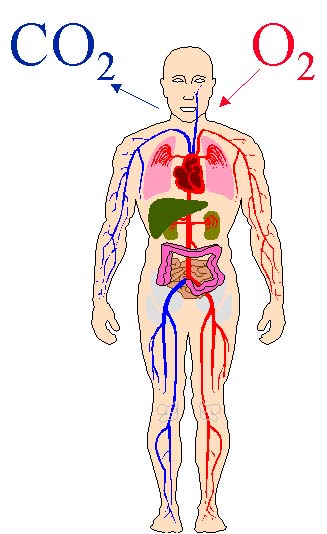
After oxygen is delivered to body organs and used by organ cells, it reacts with carbon to make carbon dioxide. Red blood cells carrying carbon dioxide turn blue. Carbon dioxide is carried back to the lungs by the red blood cells and exhaled into the surrounding atmosphere.
Given a fixed amount of oxygen as you would have in a confined space, respiration of oxygen causes carbon dioxide to increase. When oxygen decreases to less than 19.5%. the atmosphere is said to be oxygen deficient, putting occupants of the confined space at risk of losing consciousness and death.
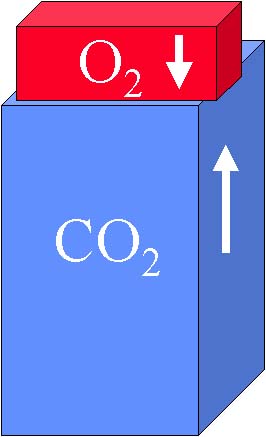
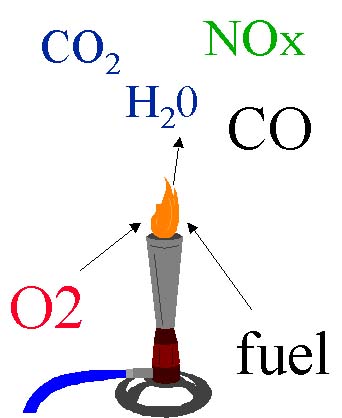
Processes which operate by the principle of combustion use up oxygen much faster than the human respiration.
Products of combustion vary with the fuel that is present and the temperature of the combustion reaction. Welding, burning natural gas, propane, gasoline, and diesel engines are examples of combustion processes.
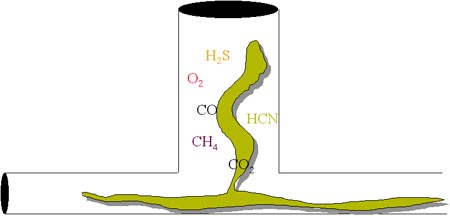
Manholes often remain covered for long periods of time. Naturally occurring toxins, such as hydrogen sulfide can accumulate inside of manholes.
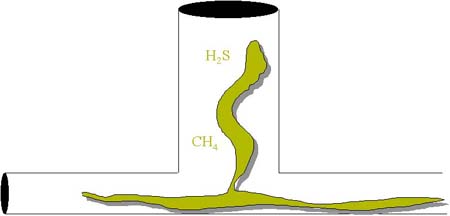
Manholes may also accumulate highly flammable gasses such as methane and ethane. Unlike the gas we receive at home, we cannot detect some of these gases with our sense of smell.
Toxic and flammable materials are sometimes illegally put into sanitary and storm sewers. Leaking tanks or spills may migrate under ground causing seepage into manholes.
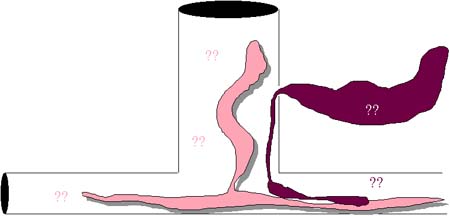
Material can leach through soil from many miles away.
Sudden releases of fluid solids, such as granulated salt, sugar, or sand, liquids, and dense gases can cause engulfment of persons inside underground tanks, or pits.
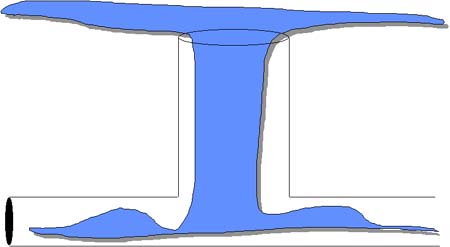
When torrential forces are suddenly released, people may be struck by moving objects , or be pushed helplessly downstream.
Trenches, ravines and other excavations may also be considered confined spaces, if there is a potential for accumulation of toxic gases, engulfment and/or the depletion of oxygen.
Many confined space entries involve a complex set of exposures to mechanical, electrical, pressure and chemical hazards.
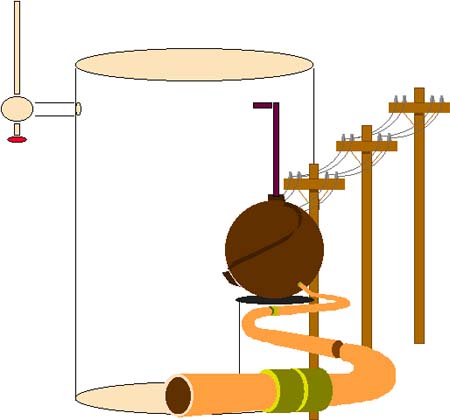
The entry of a confined space begins with a Confined Space Entry Permit.
The permit system requires that a qualified safety representative visit the work location and evaluate the conditions under which entry will be made.
|
Location and Description of Confined Space: Reason for Entry: Permit Issued to (Name of Company/Organization): |
Each process hazard to which the entrant may be exposed, adjacent operations or processes, and scheduled activity are reviewed. For each hazard identified, countermeasures are detailed on the Confined Space Entry Permit.
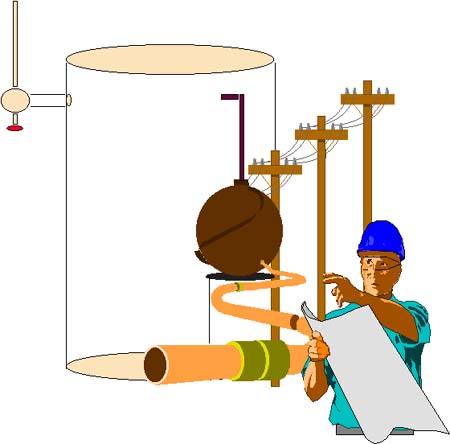
The safety representative tests the space for hazardous concentrations of known harmful substances, such as hydrogen sulfide, carbon monoxide, and flammable liquid or gas. The concentration of oxygen is measured at the same time.
If concentrations of materials are found to be at harmful levels, the confined space must be ventilated to remove them before entry.
Fresh outside air is blown into the space to dilute and remove contaminants, and supply oxygen.
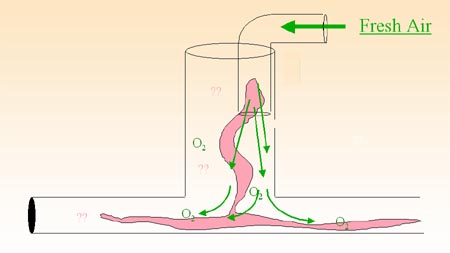
Should the concentration of contaminants remain at harmful levels, respirators may have to be worn to assure a safe air supply.
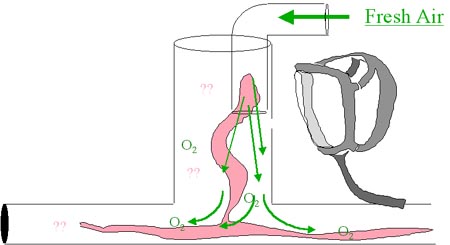
Means of emergency rescue must be readily available to the confined space entry attendant for emergency extrication of entrants.
A means must be provided for both safe normal entry or exit, and emergency extrication. Tripods with hoist, lifeline, and full body harness are often used for emergency extrication. Ladders may be used for ordinary entry and exit.
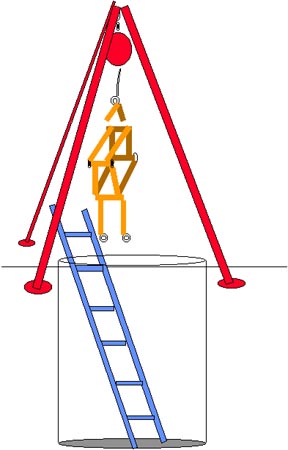
Barriers to prevent passersby and the curious from falling into the opening must be put in place.
Holes and openings must be closed or guarded when not attended.
Barriers to prevent passersby and the curious from falling into the opening must be put in place.
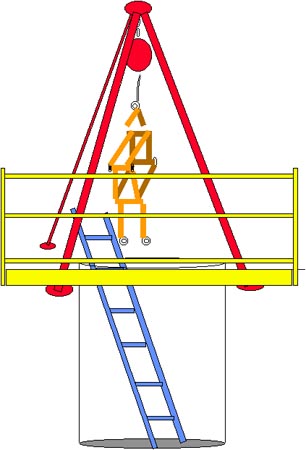
Holes and openings must be closed or guarded when not attended.
Place warning signs where pedestrians can see them.
Signs must state the hazard and the required action.
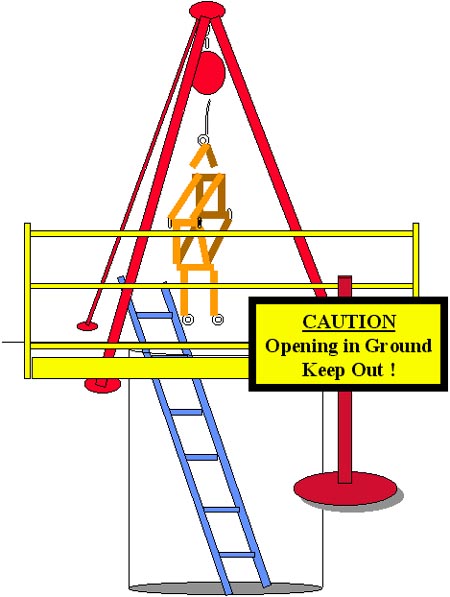
Required countermeasures include personal protective equipment for hazards expected to be found within the confined space.
Eye and head injuries are always a potential, therefore safety glasses and hard hats are required wear for entrants.
Other conditions may require the use of respirators, safety shoes, protective gloves, and other personal protective equipment.
|
Confined
Space Entry Permit |
||
| Requirements | ||
| Eye protection |
yes |
no |
| Respiratory protection |
yes |
no |
| Continuous protection |
yes |
no |
| Body protection |
yes |
no |
| Hand protection |
yes |
no |
| Foot protection |
yes |
no |
| Weather protection |
yes |
no |
Required countermeasures also include prevention of electrical shock hazards due to loss of earth ground for portable tools. GFCI’s are required for portable electric tooling.
There may also be a need to lockout and tag equipment both in the confined space and on adjacent equipment and processes.
| Confined Space Entry Permit | ||
| Requirements | ||
| Ground Fault Interruption | yes | no |
| Lockout of Hazardous Energy Sources | yes | no |
Entrants must constantly monitor the confined space for toxic gases, oxygen, and combustible gases. Entrants will be issued a personal monitor to wear for this purpose.
Entrants must leave the confined space when the monitor alarm is activated.
It is the attendant’s responsibility to see that the entrant leaves the space during an alarm.
Should conditions develop which require extrication, and the entrant cannot get out of the confined space on their own, the attendant must call for emergency assistance at once!
The attendant should attempt to remove the entrant from the confined space using tripods, hoist, and lifelines. Attendants are NOT TO ENTER CONFINED SPACES. Lethal hazards may be present within the confined space. Only properly equipped and trained emergency rescue personnel may enter confined spaces to make rescues.
Confined space entry hazards can include:
- the presence
of toxic substances
- insufficient
oxygen, or too much oxygen
- engulfment
- presence of combustible
gases and liquids
- process or
equipment related hazards.
- conditions changing from nonhazardous to hazardous.
Required countermeasures are determined by a qualified safety professional.
Once the required countermeasures are in place, a permit is issued by the safety representative and the confined space may be safely entered.
Should an emergency arise during the entry, the attendant notifies an emergency response team and attempts to extricate the entrant.
|
Confined
Space Entry Permit |
|||
| Location
and description of confined space: Reason for entry: Permit issued to: Supervisor’s Name: Attendant’s name: Permit issuer’s name: |
|||
|
%
oxygen: |
%
lower explosive limit |
ppm
CO: |
H2S: |
| Requirements: | |||
| Emergency Rescuer | yes | no | |
| Continuous Gas Monitor | yes | no | |
| Barrier for ground openings | yes | no | |
| Warning signs | yes | no | |
| Safety Harness with life line | yes | no | |
| Tripod/Hoist/Pulley | yes | no | |
| Access (ladders/other) | yes | no | |
| Eye protection | yes | no | |
| Respiratory protection | yes | no | |
| Continuous Ventilation | yes | no | |
| Body Protection | yes | no | |
| Hand Protection | yes | no | |
| Foot Protection | yes | no | |
| Weather Protection | yes | no | |
| Ground Fault Circuit | yes | no | |
| Interrupters | yes | no | |
| Lockout of Hazardous Energy | yes | no | |
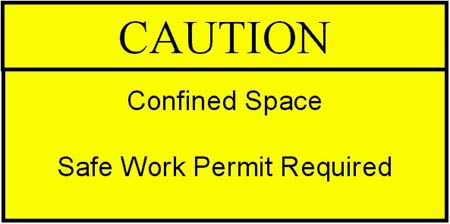
Confined spaces are required to be labeled. Some spaces may have been overlooked. Contact your safety representative when in doubt. It is up to you to obey signs and to follow permit procedures before entry.
Where to get Help?
The supervisor of a confined space entry should be contacted for any equipment necessary to complete the task at hand.
Safety Representatives are responsible for answering questions about the confined space entry permit, countermeasures, sampling methods, and instrumentation.
References and Sources for More Information
OSHA 29CFR 1910.146 Permit - Required Confined Spaces
