Final Report: An Investigation of Health Hazards on a New Construction Project
Summary Statement
A study to assess noise, chemical and ergonomic hazards during construction of the new IAM union headquarters.
1993
- Noise
- Ergonomic Hazards
- Chemical Hazards
Communication
of Results
Discussion
Conclusions
and Procedural Recommendations
Recommendations
for Future Research
A.
Noise Presentation to IAM Conference
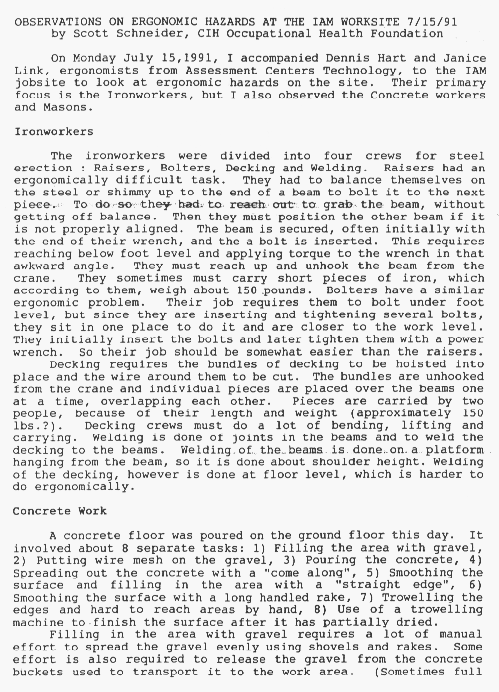
B. Ergonomic Task Analyses of Construction Work
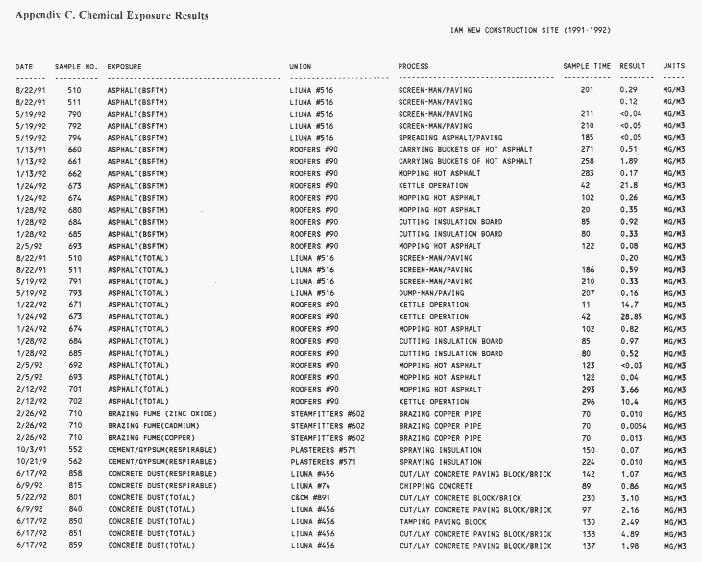
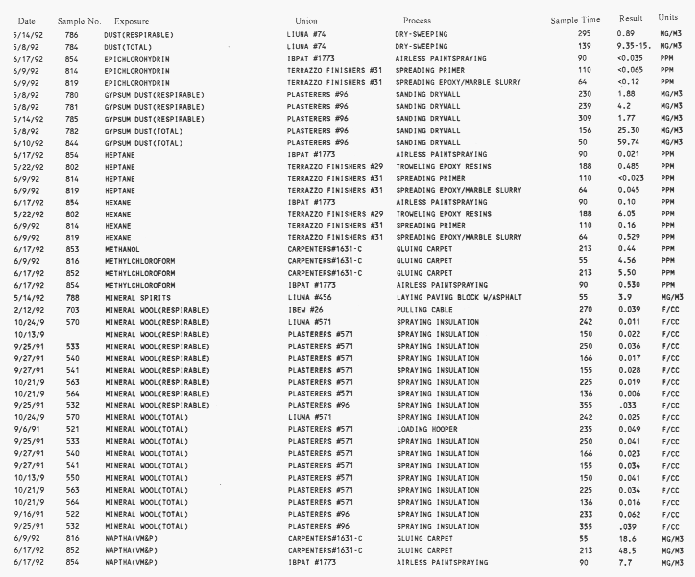
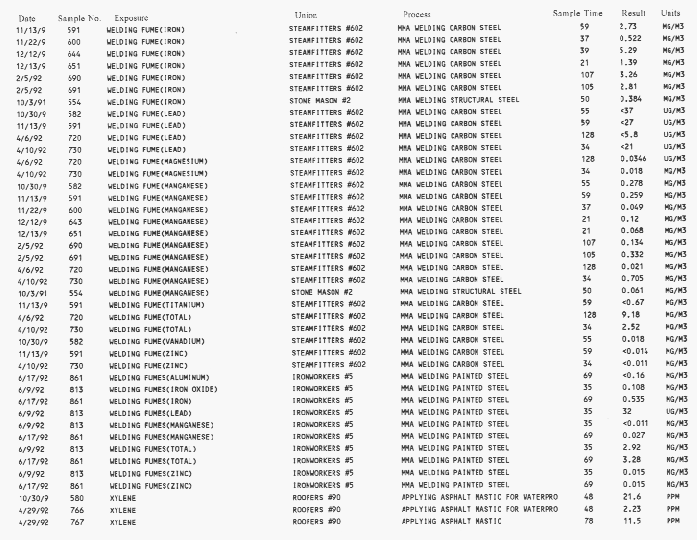
C. Chemical Exposure Results
D. Exposures Observed During Walk-Throughs
Table
1. Dust and Quartz Exposures on IAM Site
According to the Bureau of Labor Statistics (BLS), approximately 700 construction workers were killed on the job in 1990. As alarming as this number is, the BLS concedes that it may underestimate the number of deaths. With 25 percent of all occupational fatalities, construction stands out as the industry division with the highest number of deaths. Clearly, construction is a dangerous industry and construction workers know it. The immediate reality of deaths on the job may overshadow the fact that construction workers also face serious long-term health hazards on the job.
The National Institute for Occupational Safety and Health (NIOSH) has documented at least 77 toxic agents on construction sites. The agency has also found elevated death rates as a result of cancer and other diseases among construction workers. To date, however, little exposure monitoring has been done and reports in the literature about exposure levels on these jobs are rare. The goal of the investigation of health hazards on the new construction project -- the study underlying this report — was to document the range and magnitude of exposures associated with construction work. Such information permits evaluation of the health risks posed by exposures and provides a basis for recommending suitable control methods.
We chose to start with a new construction project because we thought it would present a "cleaner" problem than looking at a renovation or demolition site where the exposure picture would be complicated by materials already in place, such as asbestos and lead. We intended to identify all chemicals scheduled for use and document exposures throughout a construction project in order to determine the full range and magnitude of potential exposures.
In addition to chemical exposures, we set out to measure noise exposures and identify potential ergonomic hazards for further investigation and intervention. Noise is a well-known hazard of construction work but little exposure monitoring has been done. Ergonomic injuries are also widespread among construction workers but have received little attention, at least in the United States.
The focus of the study was a new office construction project in the Washington, DC area. The project was a four-story steel structure which now serves as headquarters for the International Association of Machinists and Aerospace Workers. The construction project began in April of 1991 and was completed in July of 1992. The general contractor was James G. Davis Corporation. Twenty-five subcontractors were on site at different stages of construction. No more than 150 workers were working on the site at any time.
Over the course of the project, we did the following:
- Attended bimonthly Project Planning Committee meetings composed of union safety stewards, contractor representatives, CPWR – Center for Construction Research and Training (CPWR), the Occupational Health Foundation (OHF), and the George Washington University occupational medicine program (GWU). During these meetings upcoming work was discussed and potential exposures were identified. We discussed their activities and presented sampling results. Minutes of these meetings are recorded and provide documentation of the chronological occurrence of various activities and associated exposures.
- Conducted routine site walk-throughs. Many brief, intermittent chemical exposures occur during construction work. The transience of such exposures prevents accurate characterization. In order to document the occurrences of such exposures, we began attempting during walk-throughs to track potential exposures by generating lists of chemicals on site.
- Collected samples of exposures to noise, mineral wool, asphalt fumes, welding fumes, silica, paint mists, solvents, dusts, and epoxy resins.
- Videotaped and analyzed work processes for ergonomic hazards.
- Provided recommendations and information to contractors and workers on topics such as noise levels and hearing protection, silica exposure and NIOSH-approved respiratory protection, and welding fumes and appropriate controls.
Noise was a significant exposure hazard throughout the project. Time-weighted-average noise dosimetry measurements of crafts engaged in various operations ranged from 74 dBA (decibels) to 104 dBA. The arithmetic mean of 29 exposure measurements was 90.25 dBA with a standard deviation of 1.96. The standard for noise exposure set by OSHA (the Occupational Safety and Health Administration) is a time-weighted-average of 90 dBA over an 8-hour day; however, the OSHA standard is generally recognized as not adequate. Most of the study's measurements were not full shift (8-hour) samples. Because impact noise is also a problem in construction, the exposures were potentially injurious. In the early months, earth-moving equipment was a significant source of noise. Power tools, compressors, and generators continued to create high sound levels throughout the project. Sound levels associated with 17 types of common construction equipment were measured (see appendix A for detailed results).
Ergonomic Hazards
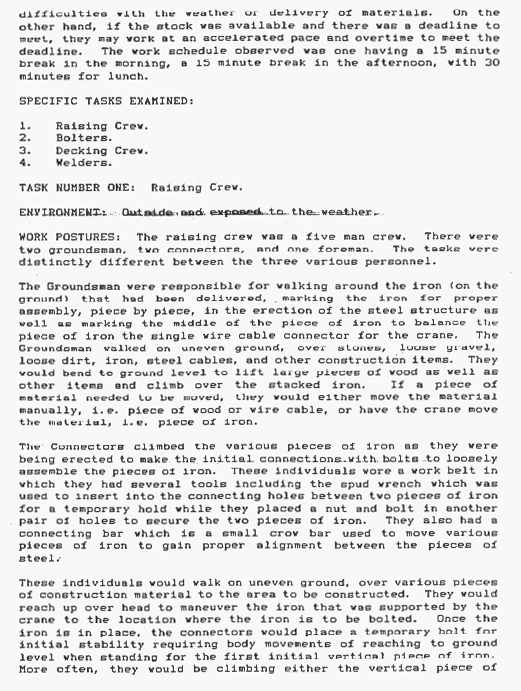
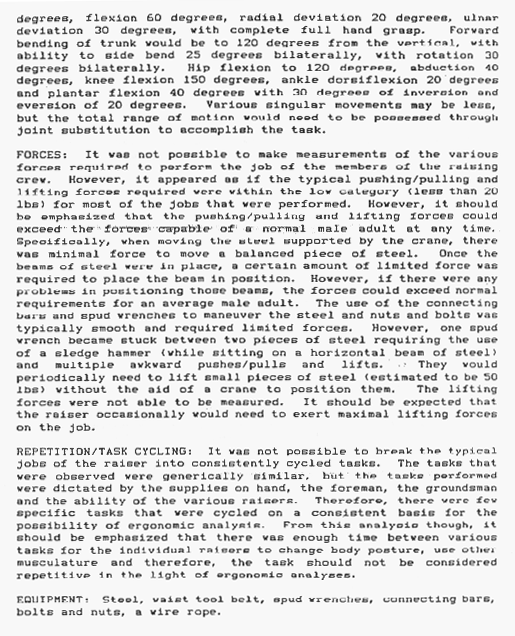
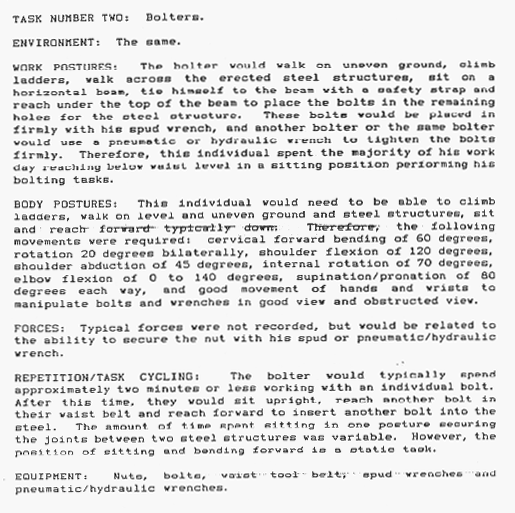
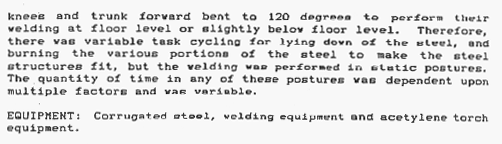
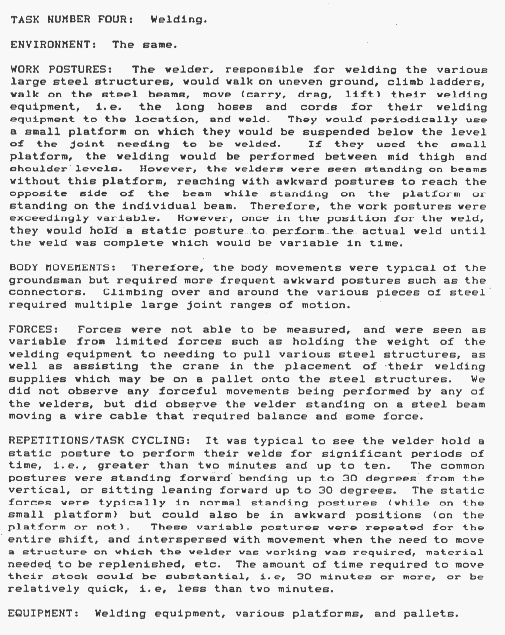
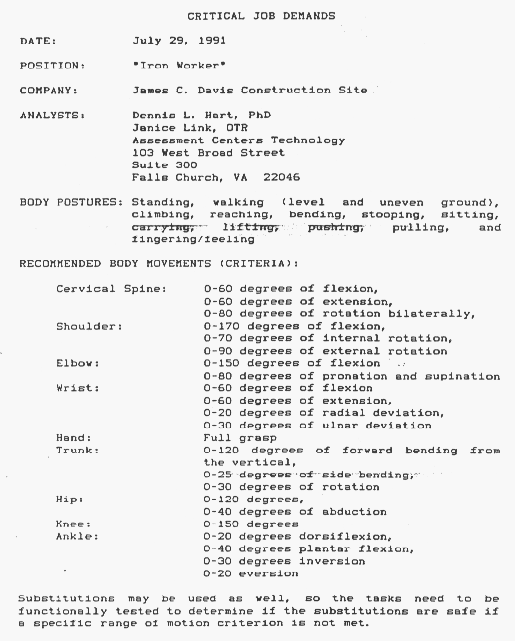
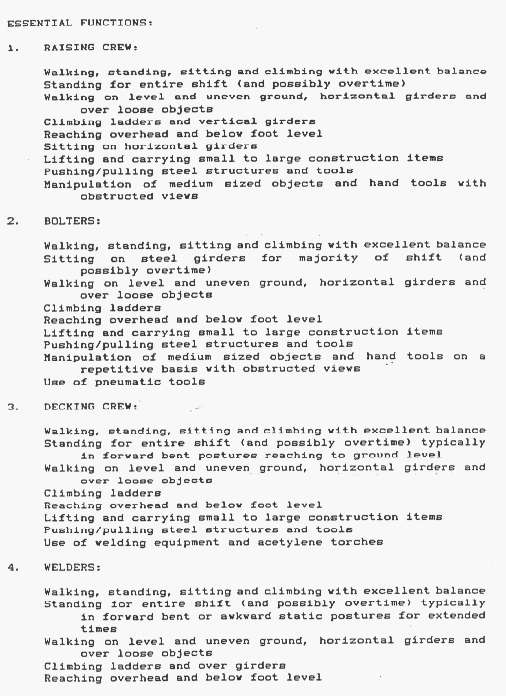
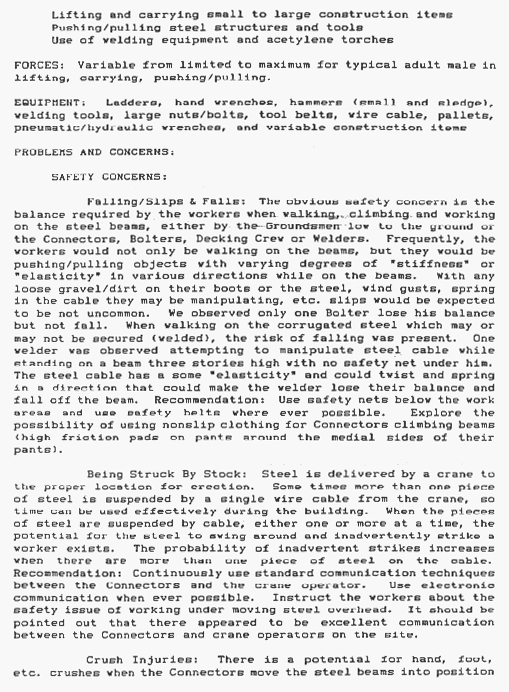
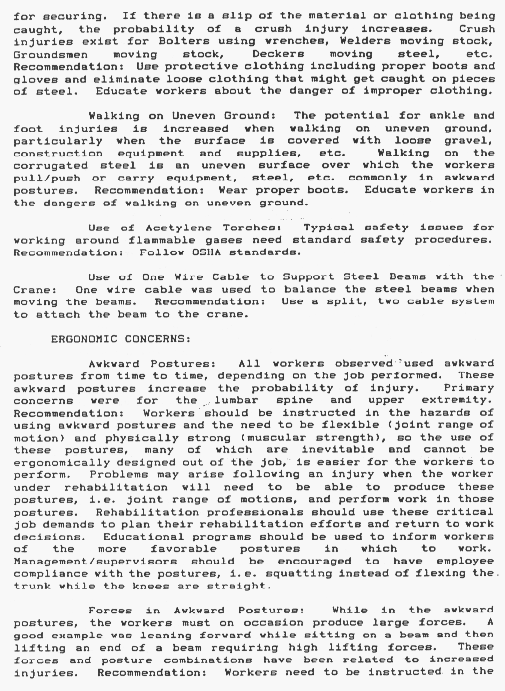
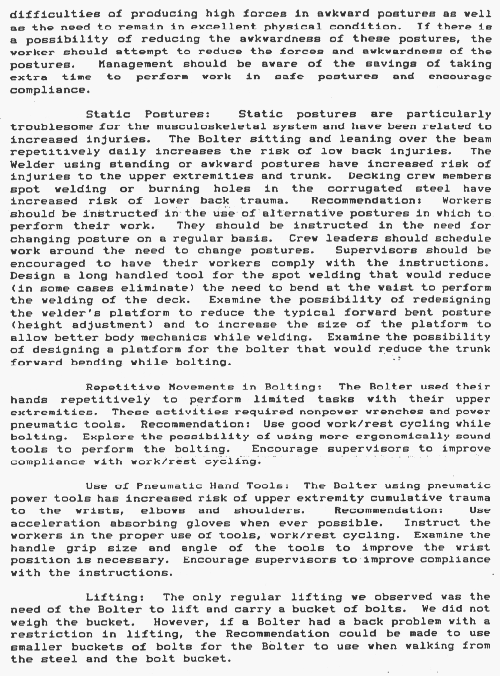
We videotaped several processes and conducting ergonomic task analyses for ironworkers and others. (Ergonomic task analyses are in appendix B). Ergonomic hazards are common in construction work. Much of the work must be done at floor or ceiling level and involves a lot of heavy-materials handling. During the early months of this project, when workers hand tamped soil, hand-arm vibration exposures appeared to be high. Hand-arm vibration exposure also appeared to be significant among laborers using jackhammers and pneumatic chipping hammers. On a new construction project, it is not uncommon to discover errors that require newly poured concrete to be chipped out. During our investigation, an entire flight of concrete steps had to be broken up with a jackhammer, while edges of concrete slabs had to be chipped out. In addition, whole-body vibration appeared to be significant for operators of earth-moving and other heavy equipment. (See CPWR report no. E1-93.)
Chemical Hazards
Mineral wool. Fireproofing composed of a resin-coated slag or rock wool was sprayed on steel beams and columns in the fall of 1991. Multiple crafts were exposed to these fibers during initial application and when working around insulated surfaces. Workers complained about eye and skin irritation from the fibers. Samples were collected to determine worker exposure to respirable and total fibers. Exposures to respirable fibers (fibers > 3 µm in length and <3.5 µm in diameter) ranged from 0.006 to 0.039 f/cc with a geometric mean exposure of 0.020 f/cc (n=9). Exposures to total fibers ranged from 0.016 to 0.062 f/cc with a geometric mean exposure of 0.034 f/cc (n=10). (Summaries of the results from the major chemical exposures sampled are in appendix C and "exposure lists" of potential exposures are in appendix D.)
Asphalt fumes. In the winter of 1991-92, roofers installed a 4-ply roof system on the building. This process involved layering insulation and felt paper with several coats of hot asphalt. Cylinders of asphalt were heated on site in a kettle maintained at approximately 500°F. Liquid asphalt was poured from a spigot at the bottom of the kettle into 5-gallon buckets and carried to mobile mop buckets. Roofers spread hot asphalt with cotton mops.
Personal breathing zone (PBZ) exposures to total particulates and the benzene soluble fraction of asphalt fumes were collected during January and February of 1992. The kettle operator had the highest exposures, which ranged from 10.4 mg/m3 to 28.85 mg/m3 total particulates. Other roofing crew members were sampled while carrying asphalt, while mopping, rolling out felt paper, and cutting in insulation. Exposures during these operations were lower than those received by the kettle operator by 2 to 3 orders of magnitude.
In addition to collecting time-weighted-average exposures using pumps and filters, instantaneous real-time data were collected using a handheld aerosol monitor and data logger provided to us by NIOSH. Work processes monitored using real-time techniques were also videotaped. Results were synchronized with videotapes by the Engineering Controls Technology Branch of NIOSH. These videos provide us with a visual record of instantaneous asphalt fume exposures during kettle operation and hot asphalt mopping.
Laborers and operating engineers working on asphalt paving crews were also monitored for exposure to total particulates and benzene soluble particulates. Exposures to total asphalt fume particulates ranged from <0.20 to 0.59 mg/m3 with a geometric mean of 0.34 mg/m3 (n=3) Exposures to the benzene soluble particulates ranged from <0.05-0.29 mg/m3 with a geometric mean of 0.08 mg/m3 (n=5).
Welding fumes. Two crafts welded on site during the project: ironworkers and steamfitters. Sheet metal workers welded duct work in the shop and brought out fabricated modules to the site. So, welding exposures occurred off site also (but were not measured for this study).
Ironworkers on the structural steel erection crew were engaged in three general welding activities:
- Arc welding structural steel columns and beams
- Arc welding galvanized decking to structural steel
- Resistance welding metal studs to galvanized decking.
Exposures were sampled outside the welding hood during each of these processes. Exposures to total welding fumes during flux core welding structural steel were 3.78 and 2.63 mg/m3. An exposure to total metal fumes measured during low hydrogen stick welding of structural steel was 6.43 mg/m3. Exposures to metal fumes measured during stick welding galvanized decking to structural steel were 1.59 and 0.807 mg/m3. Zinc exposures associated with these samples were 0.347 and 0.0722 mg/m3, respectively. Resistance welding metal studs to galvanized decking produced a total fume exposure of 1.97 mg/m3, with a zinc exposure of 0.542 mg/m3.
In November 1991, steamfitters began arc welding carbon steel pipe used to construct the chiller system. Iron and manganese were the principal components of welding fume samples collected during this type of welding. Simultaneous real-time-exposure video monitoring was conducted inside and outside the welding hood in December. Tom Cooper and Margie Edmonds, of the NIOSH Engineering Control Technology Branch, assisted us in these efforts. Steamfitters remained on the site throughout the duration of the project with the bulk of work being completed in April of 1992. Exposure monitoring continued throughout this period. Real-time videos were shown to members of the welding crew and contractors at a site meeting. The principal metal fume exposures associated with welding carbon steel were iron oxide and manganese fumes. Exposures to iron oxide fumes ranged from 0.52 to 5.29 mg/m3 with a geometric mean of 2.33 mg/m3 and a geometric standard deviation of 2.11 (n=9). Exposures to manganese ranged between 0.05 to 0.71 mg/m3 with a geometric mean exposure of 0.14 mg/m3 and a geometric standard deviation of 2.99 (n=9). Exposures to two measurements of total fume were 2.52 and 9.18 mg/m3.
Ironworkers returned in the final months of the job to install steel, circular stairs, and hand rails. The installations involved welding painted steel. Low-level exposure to lead (<0.019 and 37 ug/m3), in addition to iron (0.108 and 0.535 mg/m3) and manganese (0.011 and 0.027 mg/m3), was measured during this process.
Dusts and quartz. In April and May of 1992 a two-person crew sandblasted low exterior concrete walls of the building. This was done to pit the concrete surfaces to create an appearance similar to the granite sheathing on the exterior panels of the building. Dennis Groce and Ken Linch of the NIOSH Respiratory Disease Division visited the site during one day of sampling. OHF and NIOSH conducted air sampling inside and outside the abrasive blasting helmet. We also collected one personal sample from a plasterer working approximately 20 to 30 feet from the blasting operation. There were a number of other dust generating activities that were sampled during the project including drywall sanding, cutting concrete paving blocks, jackhammering and chipping concrete, and dry sweeping. Personal exposures during these activities were collected and analyzed for total and respirable dust concentrations (table 1). Samples were further analyzed for quartz content.
| Table 1. Dust and Quartz Exposures on IAM Site | ||
| Process | Type of exposure | Results
in mg/m3 (n=no. of samples) |
| Cutting/laying/ chipping concrete | Respirable concrete dust | 0.86 - 1.07 (n=2) |
| Cutting/laying/ tamping concrete | Total concrete dust | 1.98 - 4.89 (n=5) |
| Dry sweeping | Total dust | 9.35 - 15.00 (n=1) |
| Dry sweeping | Respirable dust | 0.89 (n=1) |
| Sanding drywall | Respirable gypsum dust | 1.77 - 4.20 (n=3) |
| Sanding drywall | Total gypsum dust | 25.30 - 59.74 (n=2) |
| Sandblasting | Respirable quartz outside helmet | <0.22 - 4.69 (n=4) |
| Sandblasting | Respirable quartz inside helmet | <0.05 - 0.06 (n=4) |
| Plastering near sandblasting | Respirable quartz | 0.21 (n=1) |
| Cutting/chipping concrete | Respirable quartz | 0.07 - 0.34 (n=2) |
| Grinding terrazzo | Respirable quartz | 0.08 (n=1) |
| Cutting/laying/ tamping concrete | Total quartz | 0.16 - 0.62 (n=3) |
| Sanding drywall | Total quartz | 0.23 (n=1) |
| Grinding terrazzo | Total quartz | 0.07 (n=1) |
Epoxy resin. A large quantity (several 55 gallon drums) of epoxy resins was used for terrazzo floors. Smaller amounts were also used in paint systems. Monitoring the terrazzo process is a complex task because multiple two-part systems were used and the work occurs in successive stages, with chemical exposures varying with each respective stage. The steps were (1) application of a two-part epoxy resin primer, (2) spreading of the terrazzo mixture (marble chips/dust/epoxy resins), and (3) grinding and buffing. A minimum of four hours drying time is required between steps 1 and 2 and about 24 hours is allowed to lapse between steps 2 and 3. Consequently, sampling was called off some days because the terrazzo crew was between applications. The MSDSs for the epoxy resins did not identify the hazardous ingredient by chemical name. The manufacturer's initial resistance to releasing this information hampered our ability to accurately sample exposures. A small number of samples were collected and analyzed for solvents, epichlorohydrin, and respirable dust. And a bulk sample of terrazzo dust captured by the vacuum trap of the buffing machine was analyzed. The bulk analysis indicated that the dust was -- by percent weight --59.2 percent calcium rich, 1.5 percent quartz (1.0 percent < 10 µm aerodynamic diameter (AD) and 0.27 percent was <5 µm AD), 35.1 percent dolomite, 1.1 percent calcium-silicates, 0.5 percent feldspar, 0.7 percent muscovite, and 1.9 percent miscellaneous. Personal sampling results indicated relatively low inhalation exposure to epichlorohydrin and organic solvents. But because of the reasons described above, these results do not provide a meaningful characterization of exposures associated with terrazzo work.
At the completion of the project, results were presented to a workshop at the AFL-CIO National Safety and Health Conference in September 1992 in Washington, D.C.; a CPWR-GWU sponsored Conference on Construction Safety and Health at the Machinist's Building on October 15, 1992; and the American Public Health Association Conference in Washington, DC in November 1992. Additional presentations are planned for the American Industrial Hygiene Conference in New Orleans in May 1993.
Results and worker fact sheets generated on the major hazards were distributed to every local union and subcontractor involved in the project. Copies were also sent to all the relevant international union safety and health representatives, the National Building and Construction Trades Department, and the local Building and Construction Trades Council. A review article on Ergonomics and Construction has been submitted for publication to the American Industrial Hygiene Association Journal. Additional scientific review articles are planned on noise and chemical hazards.
In addition, copies of the videotape showing real-time asphalt fume exposures were given to the United Union of Roofers, Waterproofers and Allied Workers' Health & Safety Office for use as a training resource. Copies of the real-time video showing welding fume exposures have been sent to the Sheet Metal Workers National Training Fund, the Welding Institute of Canada, Plumbers Local #519, and the Washington DC United Association Apprenticeship Training Facility.
The principal hazards observed were ergonomic hazards, noise, mineral wool, asphalt fumes, welding fumes, solvents, epoxy resins, and dusts -- including silica, concrete, and gypsum dust. The highest exposures were asphalt fumes among roofers with extremely high exposure to kettle operators; total and respirable quartz exposure to laborers, terrazzo workers, and plasterers and cement masons; and total gypsum dust exposures among drywall finishers.
Ergonomic hazards were prevalent throughout the project. Several observed work processes involved twisting, awkward postures, heavy lifting and exposure to vibration. Terrazzo workers, tile setters and carpet layers spent long periods of time working on their knees and are likely to be at elevated risk for knee injury.
High noise exposure was common to all trades. In the early months of the project, there were efforts made to encourage workers to use hearing protection. Cross-shift hearing examinations of workers conducted by George Washington University in conjunction with exposure measurements of tested workers demonstrated a positive correlation between cross-shift hearing threshold shifts and time-weighted sound-level exposure measurements. (Cross-shift examinations compare results at the beginning and end of a shift.) Results of monitoring were presented to workers at a tool box safety talk (these talks are held on site before work begins). The general contractor also made hearing protection available to his employees. Despite these efforts, however, attempts to get workers to wear hearing protection were largely unsuccessful. Lack of product durability, convenience, and comfort limit the use of hearing protection among construction workers. There are also concerns that hearing protection will impede communication among workers. This could make working more difficult and possibly hinder ability to hear warning sounds.
Observations from this project indicate that source control of noise through equipment engineering would be much more effective than personal protective equipment in preventing hearing loss among construction workers. Until OSHA and the unions make construction noise a priority, it is unlikely that contractors will spend the extra money to purchase quieter equipment or retrofit old equipment. The burden then falls on the use of hearing protection and the hearing protection program. Unfortunately, OSHA'S Hearing Conservation Amendment (1910.95 c) does not apply to construction. There is a great need for better hearing conservation programs on construction sites to prevent hearing loss among workers. The extension of OSHA's Hearing Conservation Amendment to construction would help greatly to increase contractor and worker awareness of the problem and increase prevention efforts.
Exposures to respirable (3.5 µm diameter =< fibers >= 10 µm length) slag or rock wool were relatively low. A relatively high percentage of the collected fibers were within the respirable size range. Fibers may be retained on the electrically conductive cowls used to sample. The literature reports deposition of as much as 58 percent of fibers on the interior of the cowl due to these effects. Although most sampling involved the insulating crew, the single highest measured exposure was received by an electrician pulling cable above the ceiling level. This work occurred approximately 3 months after the insulation application had been completed and insulation was dry and brittle. In addition, this task required that work be carried out in very close proximity to the sprayed surface. Skin exposure to mineral wool was one of the biggest complaints among workers. These exposures should be quantified on future jobs using collection media on the skin or clothing.
The exposures to mineral wool are an example of the significance of bystander exposure among construction workers. Similarly, the highest exposure to respirable quartz generated from sandblasting was received by a plasterer working near a sandblasting operation. While the sandblasting crew was equipped with Type CE Bullard Blasting helmets, the plasterer worked totally unprotected.
Real-time video monitoring of welding fume exposures taken inside the welding hood versus sampling on the collar illustrated some interesting distinctions. Average exposures on the collar were approximately twice exposures in the hood. However, the carbon steel pipe that was being welded, at times, functioned as a chimney, concentrating fumes in an upward plume. Exposures in the hood spiked when the welder leaned into the plume. In addition, the welder spent a considerable amount of time with the hood up when cleaning welds. On these occasions, collar samples may be more representative of exposure than those taken in the hood. Time analysis of these videos using collar exposures when the hood was up and hood exposures when the hood was down would yield a more accurate measurement of actual exposures. A sample holder is now available that attaches to the head band of the welding hood and permits sampling in the breathing zone of the worker at all times whether the welding hood is up or down. Exposure to welding gases also needs to be studied.
Asphalt fume exposures to the kettle operator were extremely high. We are planning to analyze real-time videos to isolate periods of high exposure and use these observations to recommend process controls. Clearly, redesign of the kettle must be considered due to the high exposures of the kettle operator and the amount of time the operator must spend near the kettle. Simple work practice controls, such as minimizing time spent near the kettle and leaving the kettle lid closed whenever possible, are also likely to reduce exposures.
Dusts are a major form of chemical exposure in construction. Dry sweeping, drywall sanding, mortar mixing, sandblasting, cutting bricks, blocks and wood, blowing insulation, tamping concrete paving stones and buffing terrazzo floors were all dust creating activities observed on this job. Because of the quartz content of building materials, many of these dust generating activities also created exposure to total and respirable quartz dust. There seemed to be little worker awareness of the hazards of these materials. For instance, one of the sandblasters was not aware that silica was a respiratory hazard and was not initially wearing an abrasive blasting helmet. After exposure results were sent to the union locals and subcontractors with fact sheets about the hazards, the subcontractor who was doing the sandblasting inquired about what he could do to reduce exposures; the subcontractor is now seriously considering using alternative abrasives.
Assessment of exposures associated with terrazzo work warrants greater focused attention. Such an assessment should include representative sampling during each sampling stage. Wipe sampling should also be conducted to determine skin exposure because of the sensitization properties of epoxy resins.
Our investigation indicates that there are a number of chemical exposures on construction sites for which few, if any, controls are used. Noise and ergonomic hazards are prevalent and universal to all trades. Exposure to hazardous particulates such as asphalt fumes, welding fumes, and quartz bearing dust are also widespread. There appears to be a general lack of awareness on construction sites of these hazards. This is especially true because many chemical hazards are "hidden" in dusts, such as concrete and sand, which are not perceived by many workers and contractors to be hazardous. There is a strong need for engineering and implementation of controls for identified hazards. There is also a need for greater hazard communication to workers, contractors, and union representatives about construction health hazards.
Our experience on this site underscores the difficulty in tracking the use of chemicals on a worksite. Although multiple crafts work side by side, there is little coordination among the subcontractors for whom they work regarding chemical use and exposures. A better system for coordinating and controlling chemical use and exposures on the site is needed. A checkpoint system that requires contractors to register the chemicals being used, how others may be affected, and how exposures may be controlled is desirable. Greater consideration of chemical use and potential exposures during the planning stages of a project is also needed. Bystander exposures, for instance, could be reduced by having areas where access is restricted to only those using the chemicals who are properly protected.
In addition, more focus is needed on identification of chemical exposures associated with specific tasks. Because exposures tend to be episodic and transient in construction, knowledge of exposure ranges are needed to anticipate what exposures might be and plan minimum protective measures (controls or protective equipment) accordingly. An exposure assessment and control strategy needs to be the focus of a major research effort in the next few years.
The widespread hearing loss among construction workers warrants an aggressive effort to attack the problem. A greater effort to improve hearing conservation programs in construction is needed. The OSHA Hearing Conservation Amendment (1910.95 c) requires noise surveys, annual hearing tests, and worker training in addition to provision of hearing protection for exposures above 85 dB, well below the OSHA limit of 90 ydB. Currently though it does not apply to the construction industry. In order to properly protect construction workers from hearing loss, a movement and/or petition to extend the hearing conservation requirements to construction is necessary. Increased training of contractors and workers will cultivate greater awareness of the problem. Contractor awareness of the seriousness of this hazard will promote greater consideration of noise when purchasing new equipment. Workers will also be more willing to participate in a hearing protection program.
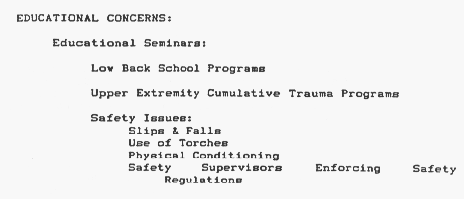
Control of ergonomic hazards in construction will require better identification of hazardous tasks; quantification of the hazards to aid in prioritization of the problems; and work with workers, contractors, and tool manufacturers to devise solutions and proper implementation. Many solutions have already been devised -- for example, new tool designs from Sweden. Where solutions have been devised, the task is to devise ways to get them onto worksites and into use. Introduction of new technology can be difficult and has to be done with the active involvement of the affected trades. Other ergonomic solutions will come from the workers themselves, who are most familiar with the work and who know what could or should be changed to make the jobs less injurious. Worker training on the recognition of hazards and discussions on how to change work procedures are essential to this process.
Hazard communication is a major problem in construction as evidenced by the large number of contractors cited by OSHA for violations. (It is the most common citation in the construction industry currently.) Tool box talks may not be an effective means of teaching the nature of chemical hazards on the job and how to control them. Many joint labor-management hazard communication training programs have found that at least four hours of quality training are needed for workers to comprehend the general concepts associated with MSDSs. In addition, regular site-specific training is necessary to supplement general principles.
Job site safety and health committees would greatly facilitate efforts to reduce hazards. To insure greater participation among all subcontractors on a site, meetings would probably need to be integrated into regular project planning meetings. Involvement of workers and line management is an essential component of an effective safety and health committee. On a construction site, this would require participation of the general site superintendent, foreman, and stewards or worker representatives from each craft.
To our knowledge, few projects have been looked at from start to finish. Because the type of construction work and its setting affect the hazards to workers, other projects -- in addition to the new construction site investigated for this study -- should be followed from start to finish. A second new construction site investigation is planned, beginning in 1993.
Renovation of commercial and industrial facilities needs to be studied. New construction has moved toward use of safer materials -- for instance, asbestos and lead are no longer used. Yet these materials exist in millions of older structures and are known to cause health problems for renovation and demolition workers. Industrial facilities have the potential to expose workers to thousands of industrial chemicals and thus merit a substantial research effort to look at potential exposures.
In addition, many settings for construction work pose site-specific hazards. For example, construction workers involved in renovation of hospitals and laboratories are at risk of exposure to chemical and biological agents.
Ergonomic hazards in construction need to be further identified and quantified to allow for prioritization. Interventions need to be assessed for their efficacy. Studies are also needed to develop effective strategies to implement successful interventions in the workplace.
Last, control technology is wholly lacking in construction. Studies are needed to develop, implement, and test the effectiveness of portable control technology. Information on the performance of control technologies will permit contractors to select appropriate equipment and figure the expense into the cost of a project. Owners and architects can specify the use of such equipment. This approach is far more manageable and effective in the construction environment where completion of the job many precede characterization of exposures and subsequent recommendations for controls.
Presented by:
Scott Schneider, CIH
Senior Industrial Hygienist
Occupational Health Foundation
Noise is an accepted part of construction work. And hearing loss has become an accepted consequence among construction workers. It has not gotten the kind of attention it deserves because people don't die from hearing loss. But it is a serious problem that we need to fix.
Historical Studies
This is not a new problem. Back in 1882 an American researcher named Holt did the first reported study on deafness among Boilermakers. He studied 40 men in Portland, Maine and, using the sound of his watch as a measure, found that only 10 of them could hear it at a distance of 1/2 to 3 feet, and those who could hear it were the men who had been working for the least number of years. Dr. Thomas Barr repeated and extended this work in 1886 in Glasgow, Scotland. He looked at 100 Boilermakers and found only 11 could hear his watch at about 1/2 to 3 feet away. He estimated that Boilermakers as a group only had about 9 percent of normal hearing. He also visited shipyards to investigate the noise exposures to Boilermakers and recorded some of the sounds on his phonograph cylinder comparing the levels with the human voice, probably one of the first instances of noise monitoring on the job.
Recent surveys on Hearing Loss
Dr. Welch did another survey on Boilermaker's hearing loss last year, although she didn't use her watch, and found similar results. I assisted with a hearing screening at the Carpenter's Union convention in 1986 which found that 83 percent had a hearing loss of over 25 decibels in at least one ear. I have no doubt that the problem is the same in many of the trades. So maybe things haven't changed much in the past 110 years.
Standards and Safety
Hearing loss is, of course, directly related to noise exposure. OSHA allows up to 8 hours of exposure to 90 decibels of noise a day. Louder noise exposures are allowed, but for shorter periods of time. But even these levels of exposure are harmful. Studies have shown that about 20 percent of workers exposed to 90 decibels for 8 hours a day will lose some or all of their hearing. Most health professionals, and the American Conference of Governmental Industrial Hygienists (ACGIH), recommend that exposures should be reduced to 85 decibels. While this may not seem like a big drop, decibels are measured on a logarithmic scale, like earthquakes, so small increases make a big difference. A three decibel increase means a doubling of the amount of sound.
Sources of Noise in Construction
We know what causes noise on construction sites, mostly construction equipment and tools. [Slides of construction equipment which produces noise] But little work has been done to measure exposures of construction workers to noise. As far as I know prior to this project, there have only been two studies of noise exposures to construction workers. One, a Swedish study in the 1973, and the other a Canadian study in 1980, which was presented as a Master's Thesis project. The Swedish study looked at about 30 different pieces of equipment and the range of sound levels coming from them. Earth moving equipment such as excavators and scrapers produced very high levels over 100 dB. Pneumatic hammers and drills also produce extremely high sound levels. Truck noise was high, above 90 dB, but quieter trucks introduced in Sweden at the time produced levels around 70 dB in the cab. Portable construction equipment, like circular saws and bolt guns produced extremely high levels of noise, but for short periods of time. Many of them also produce very high frequency noise which can be particularly damaging.
The Canadian study found levels over 100 dB associated with Skillsaws, wood planers, router saws, punch machines, air hammers, grinders, pneumatic chipping hammers, power wrenches, and impact air guns. They also measured time weighted average exposure of several trades and found, for example, that 26 percent of Carpenters had daily exposures over 87 dB and 30 percent had at least one day over 90 dB during the week they were monitored. Comparable figures were found for pipefitters, with slightly lower exposures for Laborers. Electricians were found to have the lowest exposures, but 29 percent were still over 83 dB and 6 percent over 87 dB.
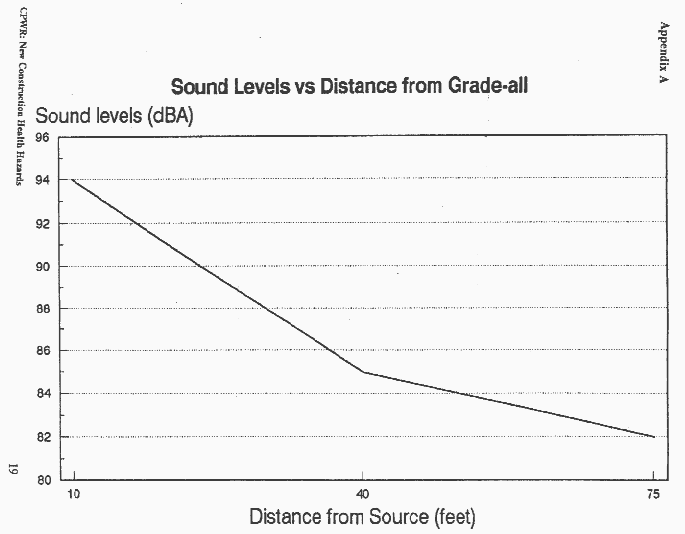
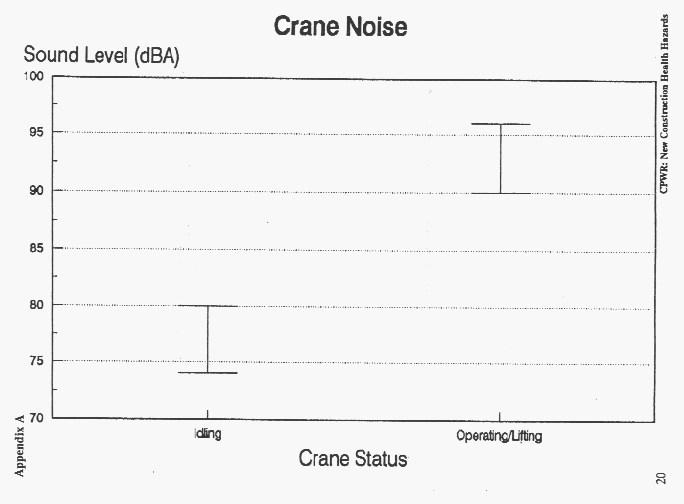
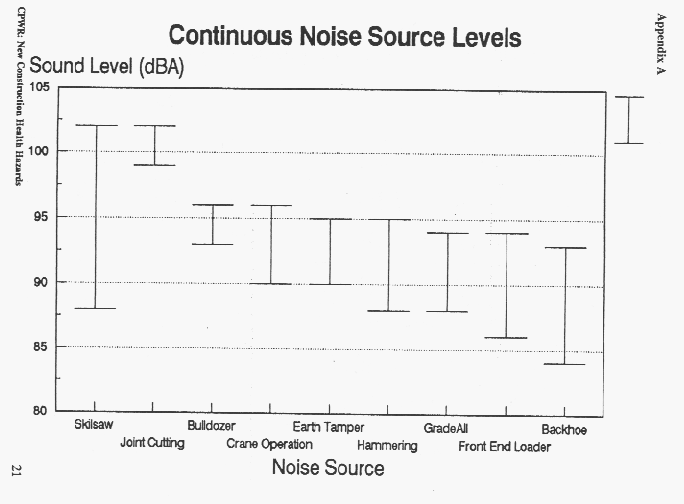
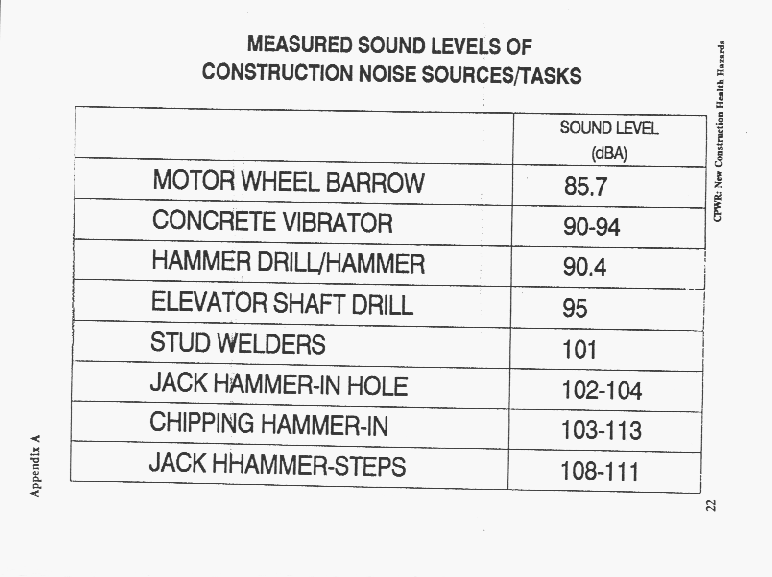
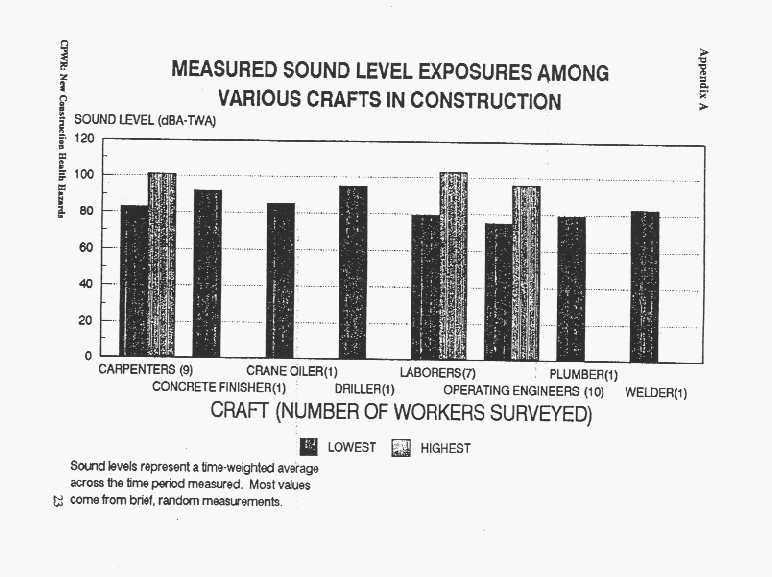
On the Machinist's site we monitored several noise sources. The exposure levels we measured are shown in the following chart. This table shows continuous noise exposures or average exposures measured over several hours. Exposure levels vary along a range for most equipment which borders on or exceeds the OSHA Permissible exposure level of 90 dB over an 8 hour day or the 85 dB level where OSHA, in general industry, requires a hearing conservation program. This next table shows sound levels from other pieces of noisy equipment, some of which are high short term exposures, like stud welding. Some of the highest levels were measured when work is done inside or in confined areas where there can be reverberation. You can see from these other figures that noise levels vary as a function of both time and distance. For example cranes are very noisy while they are operating but relatively quiet when they are idling. So the crane operators exposure is a direct function of how much of the time they are using the crane for lifting. Likewise, exposure to noise from the Grade-all, an earth moving truck, is very high close to the machine, yet within acceptable range far away from it, e.g. about 75 feet away. Noise exposures of the trades, as shown in this graph, is a direct function of the amount of time they use or work near noisy equipment and the noise level produced by that equipment. While individuals may not have exposures over the OSHA limits every day or when averaged over an 8 hour day, they will often have individual days over the limits or may exceed the shorter term limits, e.g. no more than one hour's exposure per day over 105 dB. Also since the OSHA limits are not considered safe, workers are probably still over exposed to noise, even though their exposures may be below the OSHA limits.
I should also mention that we had another noise concern we looked at on this site: Air Force flyovers. This building is located next to Andrews Air Force Base and in the flight path of some of the takeoffs. While the noise exposures from flyovers was high, about 102 dB, the duration of exposure was so short, only about half a minute or less, that it did not appreciable affect overall exposures for the workers.
Solutions:
Engineering Controls
How can this information help us to protect construction workers from hearing loss? There are basically two ways to prevent hearing loss. First is by engineering controls and the second is by the use of hearing protection. The information that we have can be used to identify particularly noisy equipment that can either be retrofitted to be quieter or when new equipment is purchased, quieter models can be specified. For most construction equipment, manufacturers produce quieter models which they often market abroad, because of the stricter noise regulations in Western Europe. For some equipment EPA over the last 20 years has required quieter models and the difference has been obvious. Thus far they have regulated noise from portable air compressors and medium and heavy on-the-road trucks. Other regulations of noisy equipment have been put on hold ever since Reagan shut down the EPA Noise Control Office about 10 years ago. I believe that, in the long run, quieter equipment will have many benefits. For example, quieter jackhammers, which are available, are also vibration-dampened so they are less likely to present a vibration risk to workers. Also, when building in cities, there may also be community noise regulations, which may require the use of quieter equipment, especially if there is work going on in the evenings or at night. Noise has also been associated with many other health effects, such as difficulty sleeping and stress, which may impact on worker health and productivity. Retrofitting presents relatively straight forward engineering problems, such as enclosing an engine in sound absorbing materials. The trick is to provide incentives to contractors to retrofit their old noisy equipment.
Hearing Protection
The alternative is to provide a hearing protection program for workers. Ten years ago OSHA passed a new regulation requiring such a program for industrial workers exposed to levels of noise above 85 dB. This is also the recommended exposure level from the ACGIH and several European countries. For some reason, OSHA did not think to apply that program requirement in the construction industry. Basically the rule requires employers to survey their plants for noise levels above this limit and provide free hearing tests and hearing protection for all workers who are overexposed. Workers must also be properly trained about the hazards of noise and the program to reduce exposures.
On this construction site, workers had hearing protection available, but it is not often the case. Even when it is available, it is often not used. There are many reasons why it is not used: First, it is difficult and uncomfortable to use. The ear plugs commonly provided (the soft foam plugs that you squeeze into shape) can get dirty if they are removed and replaced several times a day and may increase the risk of ear infections. A more practical alternative are the ear plugs on a plastic band that can be hung around the neck when not in use and where the tension from the band helps keep them in place. They may not get as dirty and probably fit better. Another option is earmuff hearing protectors, which are used widely in other countries. They can be fitted onto a hardhat and used when needed and moved up when they are not. This is particularly important in construction where much of the noise is intermittent and relieves the worker of the burden of having to wear hearing protection all day.
Training
Secondly, workers are not given much training on the need for hearing protection and its proper use. Most hearing protection is not used properly and provides less than optimal protection. Without training on the need for protection, many workers will not want to bother because they don't fully appreciate the risks. This is true of many risks like hearing loss where the loss occurs gradually over time and may not be recognized until it is too late. Another factor is that hearing protection is generally laxly enforced on construction sites. Unlike other safety rules, like wearing hardhats, wearing hearing protection is not as much a priority.
In addition, many workers have raised concerns about hearing protection interfering with their ability to hear warning sounds on the job that are necessary to protect them, e.g. vehicle back-up alarms. Workers also have to communicate frequently over high noise levels and large distances to get their work done. A very noisy worksite makes such communication very difficult. Hearing protection can add to that difficulty. For workers with significant hearing loss, which includes many construction workers, the problem is compounded. For this reason, the emphasis has to be on the intermittent use of hearing protection only when it is needed.
Another approach is to use the minimum amount of protection necessary. For example, if a workers is exposed to 92 dB from the equipment they use, it is not necessary to have an earplug with a noise reduction rating of 21 dB. However in selecting the proper protection, be aware that the plugs often provide less protection than their ratings, for several reasons, but especially because of improper use. In general workers will resist the use of hearing protection unless they feel the contractor is meeting them half way, by trying to reduce exposures as much as possible using engineering controls thereby making protective equipment unnecessary.
Recommendations for an Action Program
So where does that leave us now? I believe that contractors should have a hearing conservation program for their workers, despite the lack of an OSHA requirement at the present time. This program would:
- Identify common noise sources and measure their exposure levels.
- Reduce worker exposures by either time or distance from the source.
- Anyone working in close proximity of or using a piece of noisy equipment should be given annual hearing exams and hearing protection and trained on its proper use and its use should be enforced just like hardhats but use should be keyed to noise exposure and only required when using the equipment or in the area.
- Contractors should have a "Buy Quiet" program to require quieter equipment whenever it is purchased and consider retrofitting particularly noisy equipment.
- Unions should push OSHA to apply the hearing conservation requirement in construction to provide a level playing field for all contractors and protection for all construction workers.
Unless we begin this process and work hard to attack this problem, construction workers will continue to lose their hearing at phenomenal rates and we will be in the same position 110 years from now as we have been for the past 110 years.
Charts
Sound
Levels Vs Distance from Grade-all (12k)
Crane Noise (25k)
Continuous Noise Source Levels (36k)
Measured Sound Levels of Construction Noise Sources/Tasks
(69k)
Measured Sound Level Exposures Among Various Crafts
in Construction (101k)
Appendix B has been separated into 17 pages.
|
Page
1 (184k) |
Page
7 (36k) Page 8 (110k) Page 9 (59k) Page 10 (84k) Page 11 (175k) Page 12 (124k) |
Page
13 (130k) |
Appendix C has been broken into 4 different pages showing the results.
Page
1 (94k)
Page 2 (102k)
Page 3 (111k)
Page 4 (109k)
| Date | Craft | Process | Exposure |
| 3/11/92 | Carpenters | Gluing down pedestals for raised floor grating | Solvents |
| 3/11/92 | Ironworkers | Removing and sweeping dry mineral wool insulation from around steel columns | Mineral wool |
| 3/11/92 | Marble Workers | Grinding and shaving granite | Respirable quartz |
| 3/11/92 | Abrasive Blasters | Finishing precast with Black Beauty | Respirable dust |
| 3/11/92 | Laborer | Chipping concrete with pneumatic chipping hammer | Vibration and concrete dust |
| 3/11/92 | Steamfitters | Welding carbon steel | Welding fumes (iron and manganese) |
| 4/3/92 | Steamfitters | Tack welding in machine room | Welding fumes |
| 4/3/92 | Sheet Metal Workers | Installing draft dampers | Mineral wool dust |
| 4/3/92 | Caulkers (Stone Mason) | Cleaning tools | Xylol |
| 4/3/92 | Drywallers | Cutting rigid insulation | Fiberglass |
| 4/3/92 | Steamfitters | Soldering copper pipe in ceiling | Soldering fumes, NOKORODE (Zinc Chloride) |
| 4/3/92 | Laborer | Dry sweeping | Concrete dust, Mineral wool, dust |
| 4/3/92 | Multiple crafts — steamfitters, electricians, etc. | Working near ceiling and disturbing fireproofing | Mineral wool (Slag or rock wool) |
| 5/6/93 | Laborer | Breaking up Concrete in dumpster with jackhammer | Vibration |
| 5/6/93 | Terrazzo Workers | Spreading primer and epoxy-based marble chips or dust | Epoxy-resins, knee strain |
| 5/6/93 | Carpenters | Using "worm-driver" skill saw | Noise |
| 5/6/92 | Laborer | Sandblasting wall | Silica, noise |
| 5/6/92 | Laborer | Tamping subgrade for paving | Vibration |
| 5/6/92 | Painters | Spraying water-based paint | Paint mists |
| 5/6/92 | Steamfitters | Welding pipe in unventilated machine room | Welding fumes |
| 5/6/92 | Tilesetters | Setting tile with gravel and mortar mix 3701 (Laticrete) | Knee strain, Styrene, Butadiane |
| 5/6/92 | Laborer | Dry-sweeping | Particulates |
| 5/6/92 | Ironworkers | Welding red-iron handrail | Welding fumes |
| 5/6/92 | Drywall finisher | Sanding drywall | Gypsum dust |
| 5/6/92 | Carpenters | Cutting block to fit metal door jams | Noise, cement dust |
| 5/6/92 | Painters | Cleaning tools and spray pot with Oriole lacquer thinner | (Toluene, petroleum distillate alcohols, ketones, asters) |
| 5/6/92 | Painters | Spraying Polomyx | Mineral spirits, paint mists |
| 5/6/92 | Sheet metal workers | Shooting hangers in place in ceiling sprayed with mineral wool | Mineral wool |
| 5/14/92 | Painters | Rolling, brushing, and spraying paint | Pigments, solvents |
| 5/14/92 | Roofers | Spreading bituthane primer on roof | Xylene |
| 5/14/92 | Ironworkers | Cleaning metal surfaces | Stoddard solvent |
| 5/14/92 | Cement finishers, laborers | Using asphalt thinned with stoddard solvent to set stepping stones | Asphalt, stoddard solvent |
| 5/14/92 | Laborers | Dry-sweeping construction debris | Dust |
| 5/14/92 | Drywall hangers | Cutting and installing drywall using utility knife and screw gun | Ergonomic stress |
| 5/14/92 | Drywall finishers | Sanding drywall joint compound | Gypsum dust, ergonomic stress |
| 5/14/92 | Telephone workers | Shooting cable hangers with ramset | Mineral wool fibers |
| 5/14/92 | Tile setters | Troweling, grouting, and setting tiles | Acids, cement (wet and dry), knee and wrist strain |
| 5/14/92 | Sprinkler filters | Using pipe threading machine | Oil mist |
| 6/9/92 | Painters | Applying Shur-stik 111 wall adhesive for upholstered wall | |
| 6/9/92 | Insulators | Installing fiberglass batts | Fiberglass |
| 6/9/92 | Laborer | Dry-sweeping | Dust |
| 6/9/92 | Laborer | Chipping concrete with pneumatic chipping hammer | Vibration, Noise, Dust |
| 6/9/92 | Carpet layers | Installing carpet with adhesives. Cleaning glue off carpet | VM&P naptha, Methanol, Ethylane Glycol, 1,1,1- Trichloroethane, and other solvents |
| 6/9/92 | Ironworkers | Welding steel stairs in enclosure designed to protect finished surfaces from sparks | Welding Fumes |
| 6/9/92 | Terrazzo workers | Installing terrazzo floor system | Acid, Solvents, Epoxy Resins, Dust, Knee and Wrist strain |
| 6/9/92 | Cement finishers | Cutting and laying stepping stones | Asphalt Fumes, Dust, gasoline vapors, noise |
| 2/12/91 | Drywallers | Shooting metal place with Hilti gun, cutting studs with chop saw | Noise |
| 2/12/91 | Roofers | Installing built-up roof | Asphalt Fumes |
| 2/12/91 | Glaziers | Cutting and drilling 1/8" aluminum sheets | Noise |
| 2/12/91 | Laborers | Dry sweeping | Mixed dust |
| 2/12/91 | Carpenters | Chipping concrete slab with electric chipping hammer | Vibration, nise (103-113 dBA) |
| 2/12/91 | Steamfitters | Welding 1 1/2" carbon steel pipe | Welding fumes -- iron, manganese, gases |
| 2/12/91 | Laborers | Using pneumatic chipping hammer to break up concrete stair steps | Noise (108-111 dBA) |
| 2/12/91 | Steamfitters | Using 5 percent silver solder to braze copper pipe and cut galvanized decking out of way of pipe riser | Welding and soldering fumes |
| 2/12/91 | Drywallers | Using adhesives and caulking | Solvent vapors |
| 2/12/91 | Sprinkler Fitters | Disturbing insulation to install sprinklers | Mineral wool |
| 2/12/91 | Electrician | Disturbing insulation to pull cables | Mineral wool |
| 2/12/91 | Steamfitters | Cleaning and soldering copper joints | Solvent vapors, Soldering fumes |
| 10/24/91 | Pipefitters | Greasing threads of bolts for pipe clamps | Victaulic (lubricant) |
| 10/24/91 | Marble Workers | Caulking kerf anchor of exterior marble sheets | Silglazen |
| 10/24/91 | Ironworkers | Using as adhesive for joining exterior metal panels to structural steel | JS-773 |
| 10/24/91 | Ironworkers | Using silicone to caulk joints between exterior metal panels | |
| 10/24/91 | Marble Workers | Using skil saw to shave underside of granite sheet | Granite Dust |
| 10/24/91 | Electricians | Using to glue PVC pipe joints | Whitlam PVC cement |
| 10/24/91 | Laborer | Using chipping hammer (electric motor with chisel) on concrete wall to receive marble | Concrete dust |
| 10/24/91 | Mason | Cutting block with radial arm saw | Cement dust |
| 10/24/91 | Various crafts | Paint spray used by various crafts for layout | Paint mists, organic vapors |
| 10/24/91 | Plumbers and electricians | Cleaning PVC pipe with purple primer before gluing. Work is often done in ditches | Organic vapors |
| 10/24/91 | Mechanics | *A/W Hydraulic Oil 32 used by elevator mechanics | Petroleum oils |
| 10/24/91 | Plumbers | Using taramet to sauter copper pipe | Soldering fumes (copper and zinc) |
| 10/24/91 | Plumbers | Using Nokorode to make solder stick to copper pipe surface | Zinc chloride |
| 10/24/91 | Plumbers | Using SLIC-TITE glue on pipe threads | Organic vapors |
| 10/30/91 | Granite workers | Using polyurethane construction sealant to waterproof bolt hole | |
| 10/30/91 | Marble workers | Caulking kerf anchor of exterior marble sheets with Silglazen | |
| 10/30/91 | Ironworkers | Using JS-773 adhesive for joining exterior metal panels to structural steel | |
|
|||
| 10/30/91 | Ironworkers | Using Sil Pruf to caulk joints between exterior metal panels | |
| 10/30/91 | Marble workers | Using skil saw to shave underside of granite sheet | Granite dust |
| 10/30/91 | Masons | Cutting block with radial arm saw | Cement dust |
| 10/30/91 | Various crafts | Aerosolized paint spray used by various crafts for layout | Paint miss |
| 10/30/91 | Roofers | Using Bituthene P-3000 (a synthetic rubber Soln in organic solvent) to waterproof subgrade walls | Xylane vapors, asphalt skin contact |
| 10/30/91 | Laborers | Dry sweeping insulation waste | Mineral wool dust |
| 10/30/91 | Pipefitters (welders) | Welding carbon-steel | Welding fumes |
| 11/13/91 | Pipefitters (welders) | Installing carbon steel pipes for chiller system | Welding fumes |
| 11/13/91 | Laborer | Waterproofing elevator pit with two-part system. Mixture is painted on. Cement-based dry component. Acrylic resin liquid component | Organic vapors |
| 11/13/91 | Carpenters | Drilling into concrete | Concrete dust |
| 11/13/91 | Drywallers | Cutting drywall | Gypsum dust |
| 11/13/91 | Ironworkers | Using Sil Pruf caulk joints of aluminum window frame | |
| 11/13/91 | Various crafts | Disturbing fireproof insulation to work on surfaces | Mineral wool |
| 11/13/91 | Masons | Block laying, mortar mixing | Cement (skin-wet mortar inhalation-dry cement) |
| 11/13/91 | Laborers | Patching over snap-ties with wet mortar, mixing dry components | Wet cement skin contact |
| 11/13/91 | Laborers | Dry sweeping and scraping concrete and debris (insulation, trash, etc.) | Dust |
| 11/13/91 | Insulators | Applying thermal insulation batts to exterior of duct work | Synthetic fibers |
| 11/22/91 | Insulators | Coating insulation tape with Foster 30-35 Tite Fit coating | Organic vapors |
| 11/22/91 | Insulators | Wrapping duct with batt insulation using Foster 85-20 Adhesive | Organic vapors |
| 11/22/91 | Elevator mechanics | Filling hydraulic shafts with AW Hydraulic oil 32 | |
| 11/22/91 | Plumbers | Soldering copper pipe with Nokorode Flux-Taramet solder | Zinc chloride, Copper fumes |
| 11/22/91 | Carpenters | Laying out footers | Lime dust |
| 11/22/91 | Carpenters | Cutting plywood | Wood and resin dust |
| 11/22/91 | Laborers | Dry sweeping | Mineral wool and nuisance dust |
| 11/22/91 | Laborers | Using chipping hammer | Concrete dust |
| 11/22/91 | Ironworkers | Mounting window frames and caulking with JS 773 Butyl Sealant Sil Pruf waterproofing | |
| 11/22/91 | Ironworkers | Ironworkers | Welding fumes |
| 11/22/91 | Sheet metal workers | Hanging duct from ceiling (involving disturbance of fireproofing) | Mineral wool dust |
| 11/22/91 | Drywallers | Cutting metal studs with electric saw | Metal dust |