

Summary Statement
Steps to take to stay safe while working outside during a lightning storm.
|
Ways Lightning Can Kill
There are five ways in which lightning can severely injure or kill people or animals.
- A direct strike usually results in cardiac arrest and/or stoppage of breathing.
- A sideflash may occur when the body of a person provides an alternate or parallel path for the current. This means the person may be another way for the current to reach the ground. If the current passes through the head or heart, death may result.
- Conducted current from a lightning flash may range from tingling shock to a massive current diverted from a poorly grounded electric power pole through the wiring system.
- Step voltage radiates out through the ground from a struck tree or pole. This results in many livestock deaths every year.
- Fires, fallen trees, crushed cars. These are secondary effects. Injuries that occur from these are an indirect result of lightning.
Protection During Lightning
Storms
There are several things one can do if caught outdoors when a lightning storm strikes. Take shelter inside a building or car and close the windows and doors. Get off farm machinery. Get out of the water if you are swimming or boating, and get away from it. If boating, stay low and avoid contact with the water.
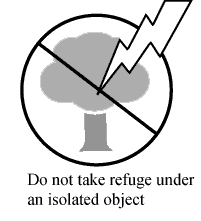 Do not take refuge under any tall, isolated object, such as a tent or
tree. Standing under a group of trees, shorter than others in the area,
is better than being in the open. Avoid electrical fences, clothes lines,
metal pipes, rails, telephone poles and other conductors. Put down any
object that might conduct electricity, such as a rake, hoe or shovel.
Seek low ground, preferably a ditch or gully. If you are outside with
no protection, get to a low spot. Make your body low to the ground, but
do not lie flat on the earth. Curl on your side or drop to your knees
and bend forward, putting your hands on your knees. If there is a group
of people, spread out. If someone feels their hair stand on end, it may
mean lightning is about to strike. Stay calm and keep low. This will help
reduce your chances of being struck by lightning.
Do not take refuge under any tall, isolated object, such as a tent or
tree. Standing under a group of trees, shorter than others in the area,
is better than being in the open. Avoid electrical fences, clothes lines,
metal pipes, rails, telephone poles and other conductors. Put down any
object that might conduct electricity, such as a rake, hoe or shovel.
Seek low ground, preferably a ditch or gully. If you are outside with
no protection, get to a low spot. Make your body low to the ground, but
do not lie flat on the earth. Curl on your side or drop to your knees
and bend forward, putting your hands on your knees. If there is a group
of people, spread out. If someone feels their hair stand on end, it may
mean lightning is about to strike. Stay calm and keep low. This will help
reduce your chances of being struck by lightning.
If lightning strikes are suspected, keep clear of windows if inside a dwelling. Turn off the television and any other electrical appliances. Electricians suggest unplugging televisions and other valuable appliances because lightning can strike or cause electrical surges that can destroy these appliances. Postpone baths, showers and doing dishes until the storm passes because there is the possibility of electrocution. Stay away from water and gas pipes, electrical appliances and telephones beca se electricity can travel through these and cause electrocution.
Lightning-Caused Hazards
Fallen Wires: Do not touch fallen wires. Report them to the police or local utility immediately. If the wire should fall on an occupied vehicle, tell the driver to stay in it and drive away, if possible. If they are unable to drive away, tell them to wait for help and do not get out. They are safe inside the car, but should avoid touching the metal parts of the car.
Electrical Fires: If an appliance or tool catches fire, try to unplug it or turn off the current at the fuse box. Do not pour water on the fire. Use a Class C fire extinguisher or throw baking soda on the fire. If it gets out of control, call the local fire department and get out.
First Aid for Lightning Victims
|
If a person struck by lightning appears only stunned or otherwise unhurt, medical attention may still be needed. Check for burns, especially at fingers and toes, and areas next to buckles and jewelry. Make sure all lightning victims have a medical examination even if they do not seem to need it.
