

Summary Statement
Presentation at 2010 Crane & Rigging Conference on the causes of crane-related deaths.
May 27, 2010
Presented at 2010 Crane & Rigging Conference May 27, 2010
Overview
- Analysis of crane related deaths and injuries in the U.S. construction industry
- Description of selected incidents
- Sources of data
- Bureau of Labor statistics CFOI Research File
- CraneAccidents.com
- OSHA Underground
- Cranes Today
- Weekly Toll
- News articles
- Descriptive statistics on deaths and injuries
- Recommendations/ Operation and Inspections
- Status of Regulation
Background: Selected Fatal Crane Incidents 2008*
3/15/08 New York, NY. Tower crane collapsed while being jumped, damaging several buildings.
-
6 construction workers and 1 bystander died
13 construction workers and 11 first responders injured
-
2 construction workers died
5 construction workers injured
5/30/08 New York, NY. Crane cab, boom and chain deck separate from tower mast and fell to street.
-
2 construction workers died
1 construction worker and 1 bystander injured
7/18/08 Houston, TX. Mobile crane fell on tent.
-
4 construction workers died
7 construction workers injured
7/24/08 Oklahoma City, OK. Mobile crane putting steeple on church collapses on car.
-
1 bystander died
1 bystander injured
10/10/08 China. Tower crane collapses on kindergarten.
5 children dead,
3 injured
* Source: Newspaper reports
Summary of Construction Crane-Related Deaths & Injuries, January to December, 2008*
| Deaths | Injuries | |
| Construction workers | 54 | 100 |
| Bystanders | 4 | 15 |
| Rescue workers | -- | 11 |
| Total | 58 | 126 |
*Involves incidents involving 88 mobile cranes, 7 tower cranes, 1 gantry crane and 1 crawler crane.
Sources: CraneAccidents.com, News articles, OSHA Underground, Cranes Today, The Weekly Toll
Causes of Construction Worker Crane-Related Deaths & Injuries, Jan. 1–Dec. 31, 2008*
| Cause | # Incidents (%) | Deaths | Injuries |
| Crane collapses | 34 (39%) | 25 | 59 |
| Overhead power line contacts | 12 (14%) | 10 | 8 |
| Struck by crane load | 12 (14%) | 6 | 10 |
| Struck by other crane parts | 10 (11%) | 6 | 7 |
| Other causes* | 20 (23%) | 7 | 16 |
| Total | 88 | 54 | 100 |
* Includes 7 highway incidents, 6 falls, 3 caught in/between, 3 struck by non-crane falling objects, and 1 struck by lightning incident
Causes of Bystander and Other Crane-Related Deaths & Injuries, Jan.1 to Dec. 31, 2008
| Cause | Incidents | Deaths | Injuries |
| Highway collisions | 6 (40%) | 1 | 6 |
| Crane collapses | 4 (27%) | 3 | 14* |
| Other causes ** | 5 (33%) | - | 6 |
| Total | 15 | 4 | 26 |
* Includes 11 first responder injuries in 3/15 New York tower crane collapse
** Includes 2 work zone intrusions, 1 struck by crane load, 1 struck by falling crane boom, and 1 overhead power line contact.
Crane-Related Deaths & Injuries by State, Jan. 1 to Dec. 31, 2008
- Summary:
- 35 states had 97 crane incidents involving 57 deaths and 127 injuries
- States with the most incidents:
- Fl: 13 (13%) with 3 deaths and 19 injuries
- TX: 9 (9%) with 9 deaths and 20 injuries
- NY: 7 (7%) with 11 deaths and 35 injuries
These 3 states had 40% of deaths and 58% of injuries
Crane-Related Deaths in Construction, 1992-2006
632 crane-related deaths from 610 incidents in construction from 1992-2006
- - An average of 42 deaths/year
Includes 18 multiple-death incidents involving a total of 40 deaths
Source: U.S. Bureau of Labor Statistics Census of Fatal Occupational Injuries Research File. Data identified by selecting CFOI Source and Secondary Source codes = “Cranes”, and searching Narratives for key work “crane”.
Crane-Related Deaths in Construction by Year, 1992-2006
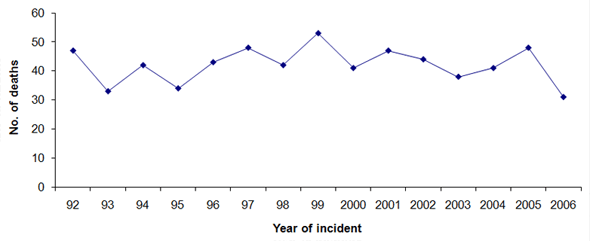
Source: U.S. Bureau of Labor Statistics Census of Fatal Occupational Injuries Research File
Causes of Crane-Related Deaths in Construction, 1992-2006
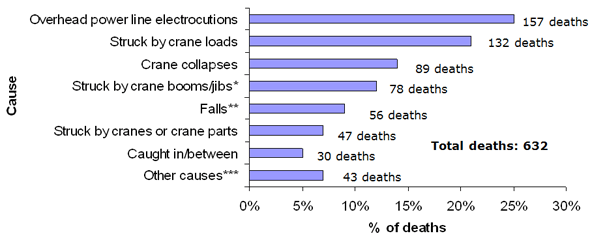
* Included 64 struck by falling booms/jibs
** Included 21 falls from cranes, 9 falls from crane baskets, 8 from crane loads.
***Other causes included 9 highway incidents.
Source: U.S. Bureau of Labor Statistics Census of Fatal Occupational Injuries Research File
Types of Cranes Involved in Fatalities
- Mobile cranes
- Tower cranes
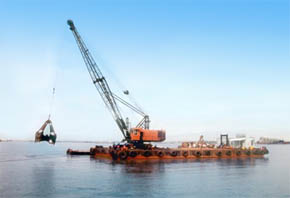
- Floating or barge cranes
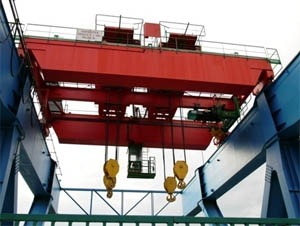
- Overhead cranes
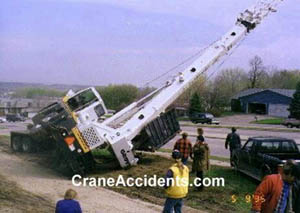
Types of Cranes Involved: Mobile Cranes
At least 71% of all crane-related incidents involved mobile cranes
Mobile cranes were involved in:
- 80 of 95 (84%) of overhead power line incidents
- 37 of 59 (63%) of crane collapses
- 35 of 59 (60%) of struck by boom/jib incidents
Types of Cranes Involved: Tower Cranes
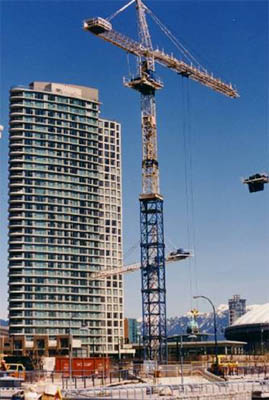
Tower cranes were involved in:
- 16 of 306 (5%) of all crane related incidents
- 5 of 24 (21%) of struck by crane load incidents
- 5 of 59 (8%) of struck by boom/jib deaths
Types of Cranes Involved: Other/unspecified cranes
Other/unspecified cranes were involved in 24% of all crane related incidents, including:
- 13 floating or barge crane incidents
- 12 overhead crane incidents
- 49 unspecified cranes (16% of incidents)
 |
 |
Main Causes of Worker Deaths, by Frequency
- Electrocutions – from overhead power lines
- Struck by crane load
- Crane collapse
- Struck by falling boom/jib
Why Workers Died: Overhead Power Line Electrocutions
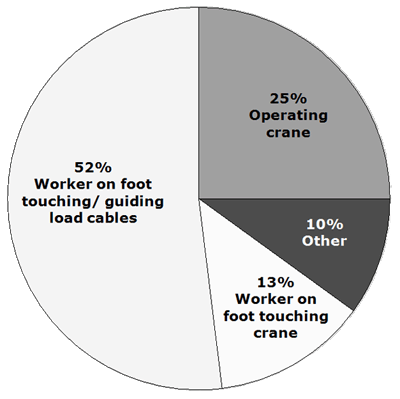 |
1992 - 2006 Number of Deaths: 157 |
Source: U.S. Bureau of Labor Statistics Census of Fatal Occupational Injuries Research File
Why Workers Died: Struck By Crane Loads
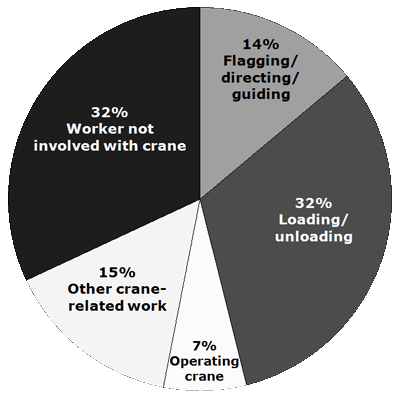 |
1992 - 2006 Number of Deaths: 132 |
Source: U.S. Bureau of Labor Statistics Census of Fatal Occupational Injuries Research File
Why Workers Died: Crane Collapses
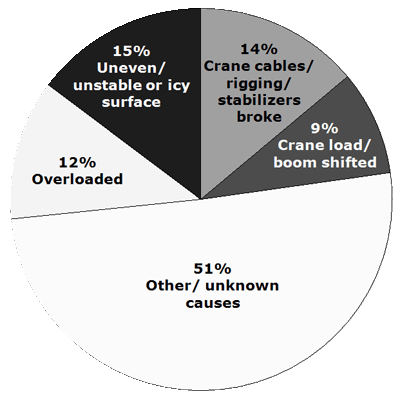 |
1992 - 2006 Number of Collapses: 81 Number of Deaths: 89 |
Source: U.S. Bureau of Labor Statistics Census of Fatal Occupational Injuries Research File
Why Workers Died: Struck by Falling Booms/Jibs
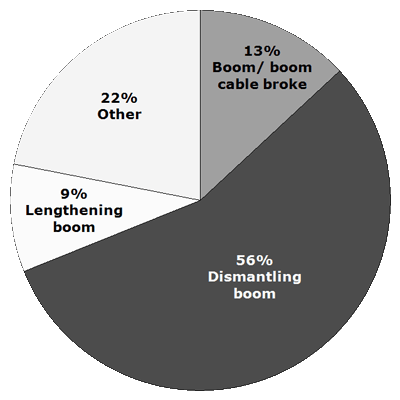 |
1992 - 2006 Number of Deaths: 64 |
Source: U.S. Bureau of Labor Statistics Census of Fatal Occupational Injuries Research File
Trades of Workers Who Died Crane-Related Deaths in Construction, 1992-2006
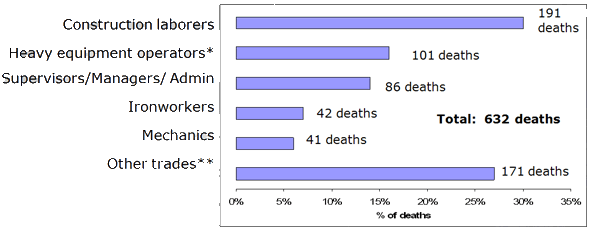
* Includes 62 crane and tower operators, 21 operating engineers and other construction equipment operators, and 7 hoist and winch operators.
** Includes 24 welders and cutters, 22 electrical workers, 21 mechanics, 17 sheet metal workers, 14 truck drivers, and 73 others.
Source: U.S. Bureau of Labor Statistics Census of Fatal Occupational Injuries Research File
Recommendations
- Crane operators should be certified.
- Presently only 15 states and a few cities (including New York City and Chicago) require certification.
- Crane riggers and signalpersons should be adequately trained.
- Crane inspectors should be qualified persons.
- OSHA only requires that they be competent persons
- Cranes should be inspected before being assembled or modified.
- Only trained workers under the supervision of a qualified person and competent person should assemble, modify or disassemble cranes.
- Crane loads should not be allowed to pass over street traffic.
- OSHA should conduct more thorough investigations of crane-related fatalities and capture more complete data in its reporting system.
- OSHA should take immediately action on the proposed consensus crane and derrick standard for construction.
Regulatory Overview
On July 9, 2004, the Federal Advisory Committee on cranes and derricks (C-DAC) reached a consensus for a new crane and derricks standard.
On October 9, 2008, OSHA published a proposed rule on Cranes and Derricks in Construction in the Federal Register. The deadline for comments was January 22, 2009 and a hearing held March 17. Final rule is due in July, 2010
For Further Information
- Mike McCann: mmccann@cpwr.com
- Electronic Library of Construction Safety and Health (eLCOSH): www.elcosh.org
- CPWR – The Center for Construction Research and Training: www.cpwr.com
